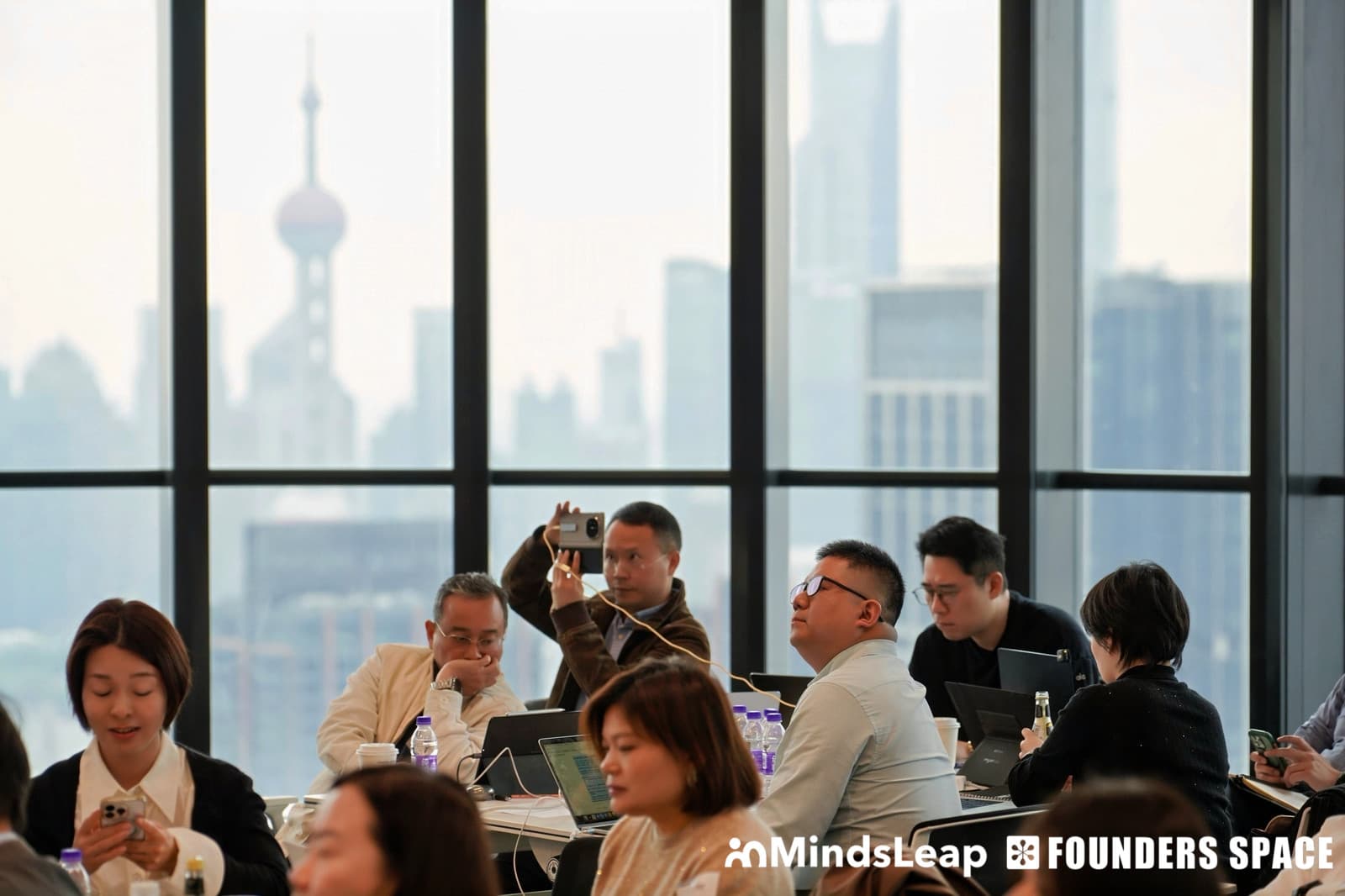
April 16-17, 2026 | Shanghai
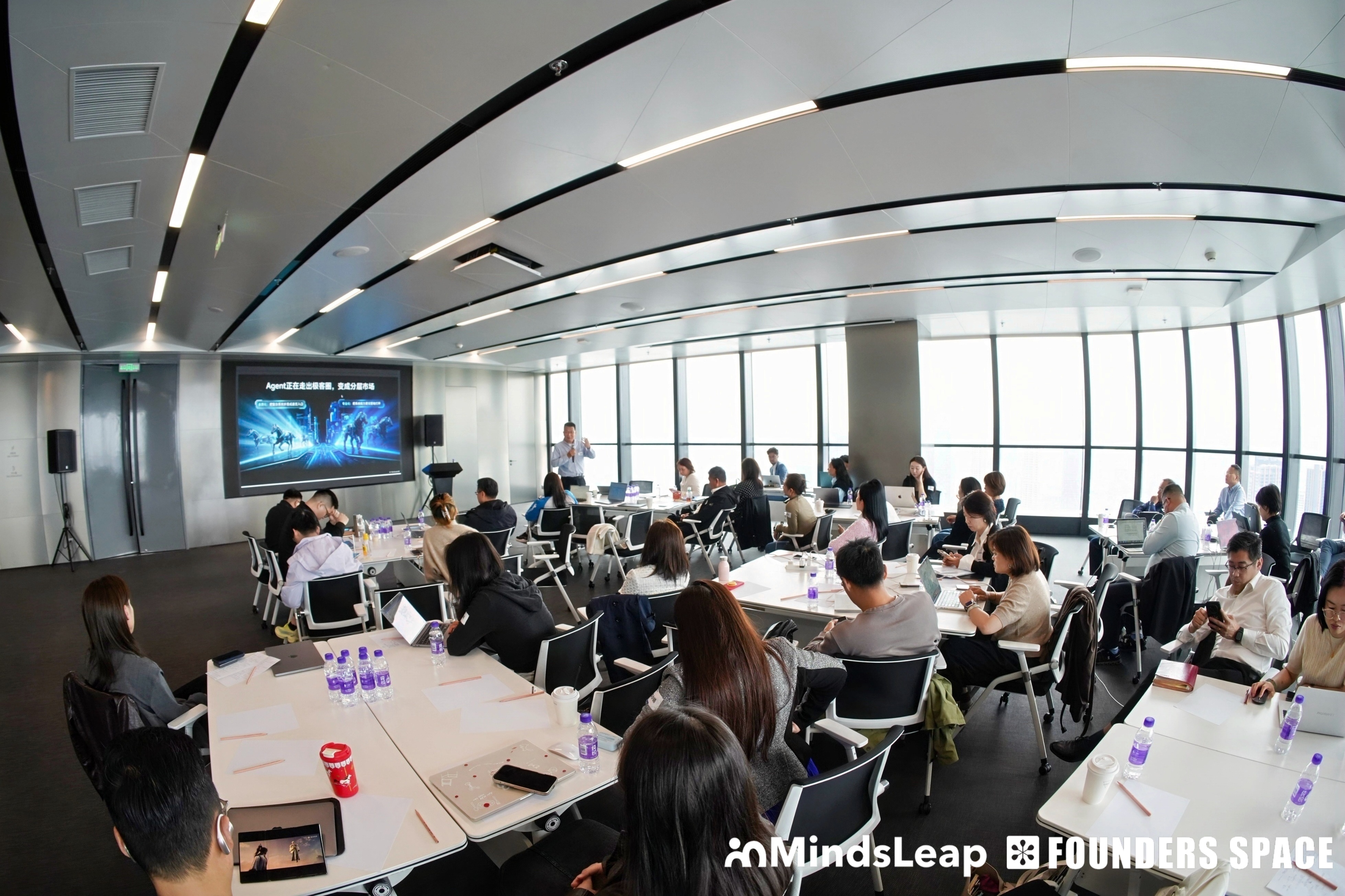
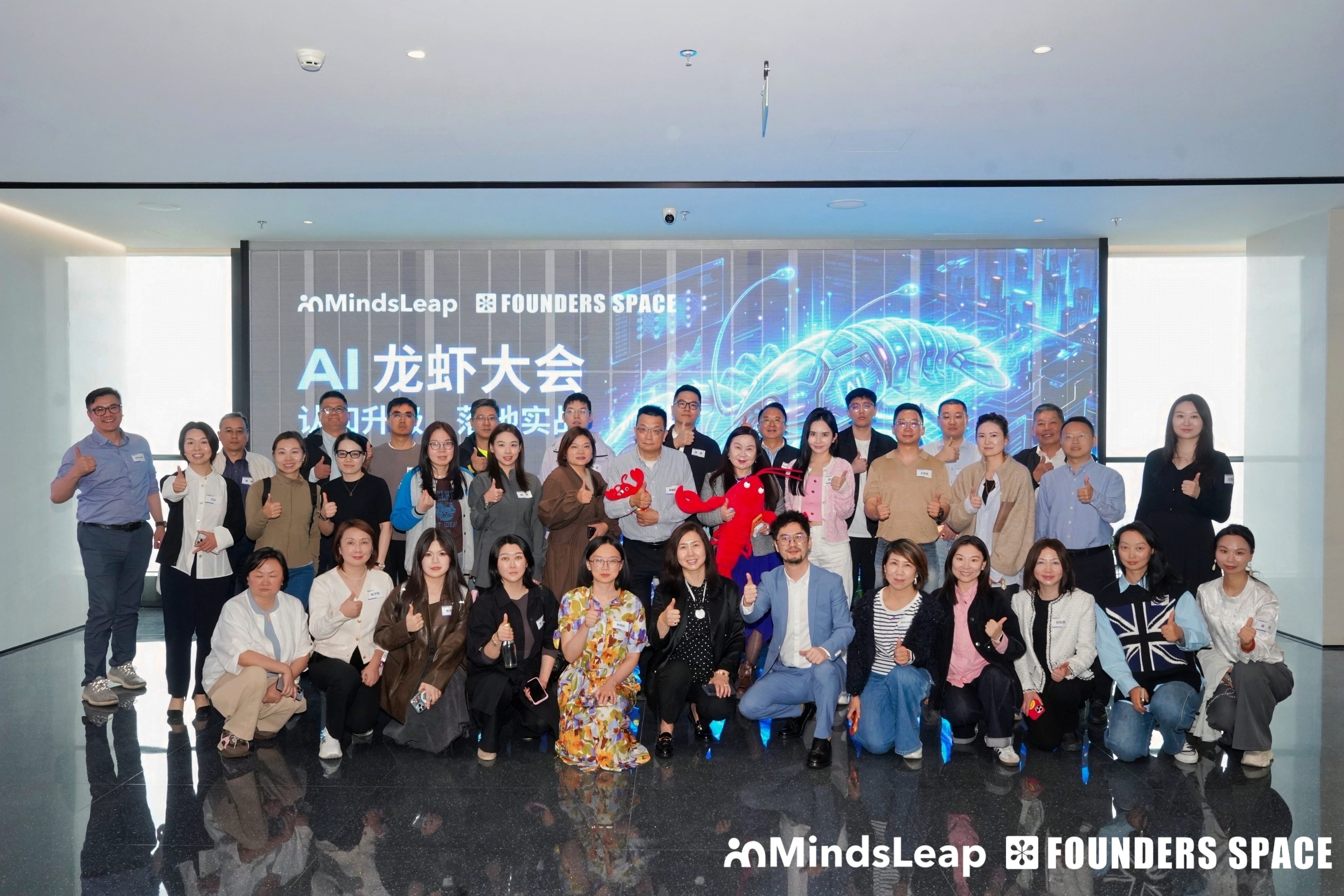
AI Lobster Shanghai took place in Shanghai on April 16-17, 2026. Speakers from the front lines of AI coding, enterprise agents, organizational intelligence, and enterprise services came together to explore AI-powered growth, enterprise agent deployment, multi-agent collaboration, safety boundaries, and operational workflows.
This was not an event built around abstract AI concepts. It felt more like a strategic calibration session for business leaders, technical decision-makers, and innovation practitioners. Whether the topic was AI coding workflows, internal agent platforms, token management, security controls, or organizational collaboration, the discussions pointed in the same direction:
AI is moving from a personal productivity tool to an enterprise collaboration system, and what companies now need is not only access to models, but the ability to manage AI well.
A concentrated discussion on how enterprise AI actually becomes operational
AI Lobster Shanghai brought together speakers from across the industry, including Jiang Yizhen, Chief AI Scientist at U-friend Network; Lincoln, CEO of MindsLeap; Zhou Zhongjie, Chairman of Qiantuo Technology; Yang Biting, AI Solutions Lead for DingTalk Hangzhou; and Iris, AI Solutions and Delivery Lead at Frontis Technology.
Although their backgrounds were different, the key questions they addressed were strikingly aligned:
- How AI coding moves from intuition-driven experimentation to engineering discipline and control
- How enterprise agents can move from demo environments into real production
- How organizations can design memory, permissions, evaluation, and rollback in multi-model and multi-agent systems
- How to balance cost, safety, efficiency, and organizational capability
- How managers shift from doing the work themselves to defining rules and managing AI collaboration
Taken together, the event became more than a showcase of tools. It became a forward-looking conversation about how organizations enter the agentic era.
Jiang Yizhen: AI coding is moving from vibe to harness engineering
Jiang Yizhen, Chief AI Scientist at U-friend Network, mapped the evolution of AI coding from Vibe Coding to Spec-Driven Development and then to Harness Engineering.
He argued that while early-stage vibe coding can feel fast and exciting, the cost of failure rises sharply once teams enter production environments. Low skill-routing accuracy, permission issues, expensive bug repair, and command-level operational risk can quickly turn apparent speed into operational instability.
In his view, 2026 marks a transition point: AI coding is no longer about letting AI “just write code,” but about building controlled systems around goals, evaluation, rollback, shared memory, human checkpoints, and clearly defined boundaries.
The underlying message was clear:
What enterprises need is not just a model that can code, but an engineering system that can produce stable and repeatable results.
Lincoln: the real issue is the human skill gap in the AI era
Lincoln, CEO of MindsLeap and Founders Space China, shared his latest view on AI trends and argued that the real contradiction in AI adoption today is no longer just model capability, but the human skill bottleneck around it.
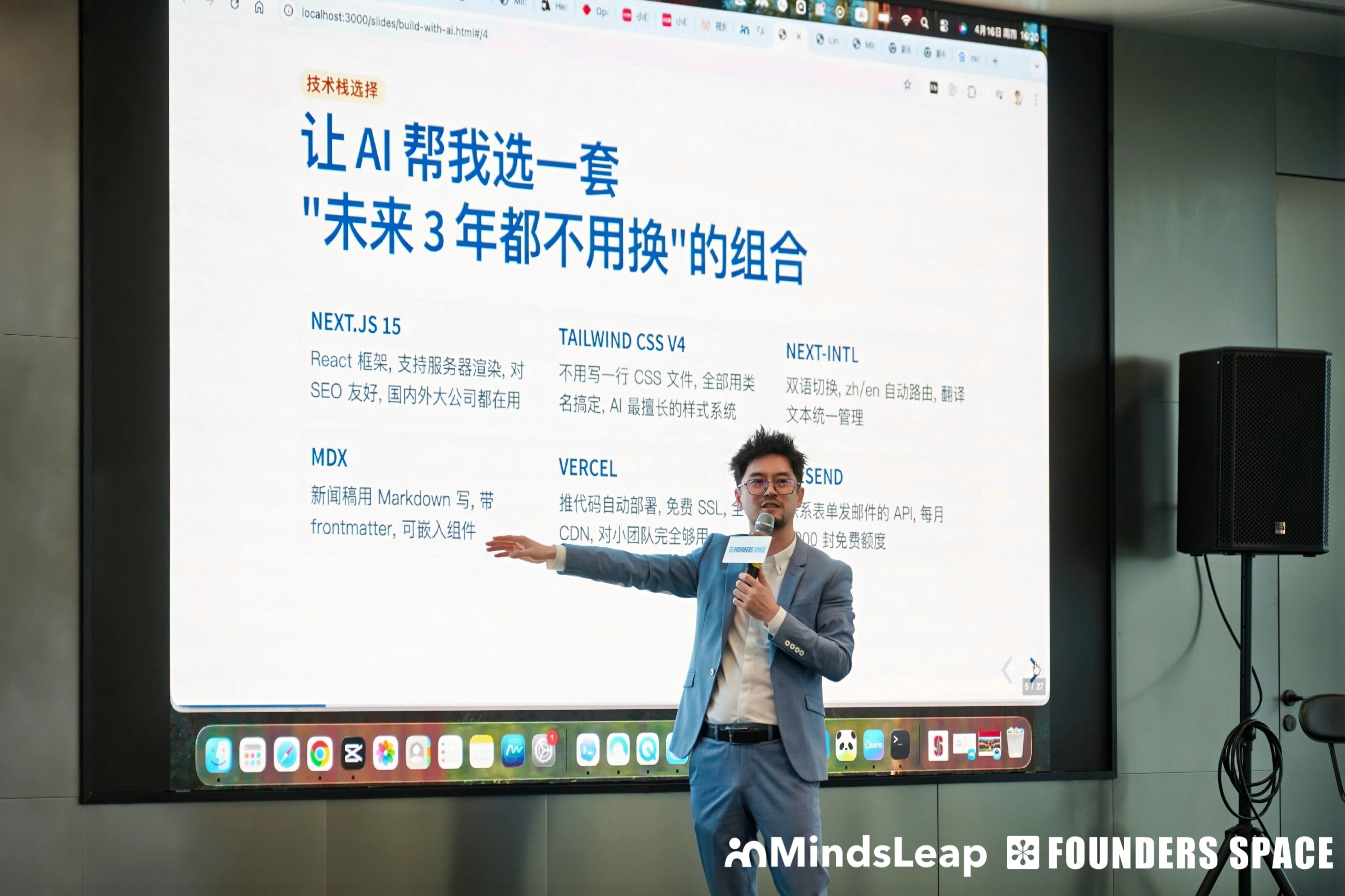
From that perspective, the core management questions are no longer “Should we use AI?” but:
- How do we define rules so AI can optimize within a system?
- How do we build better memory and skill structures?
- How do multiple models and agents evaluate and coordinate with one another?
- How do we move from AI in the loop to people in the loop?
He also shared the 2026 roadmap of the Founders AI Club, showing how MindsLeap is continuing to build founder communities, AI learning journeys, and practical implementation environments.
One of his most important points was that a growing share of software will no longer be built primarily for human users, but for AI systems. In that world, CLI, specifications, memory, and workflows become key infrastructure for machine-native collaboration.
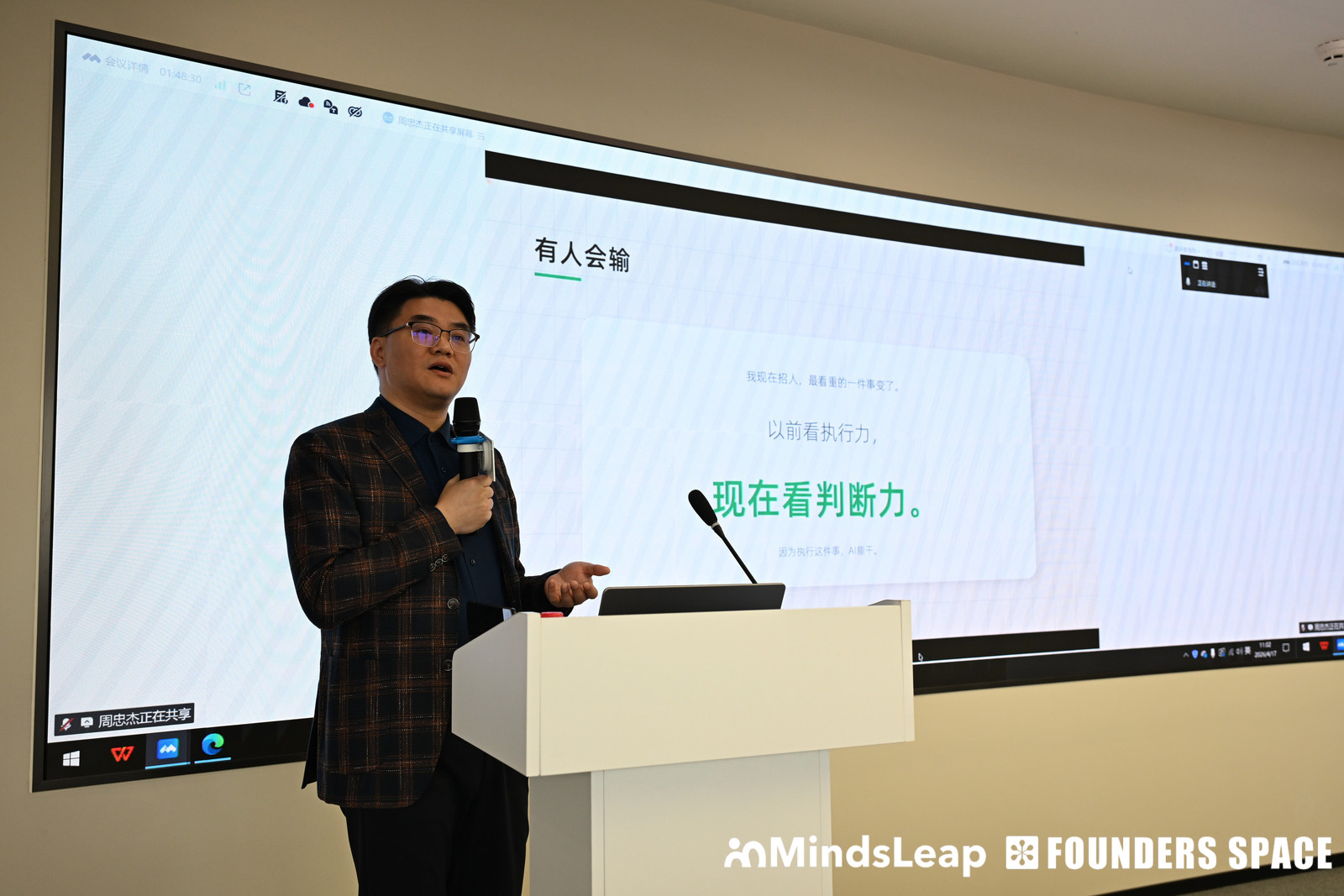
Zhou Zhongjie: 5 billion tokens bought real enterprise agent experience, not just theory
Zhou Zhongjie, Chairman of Qiantuo Technology and CEO of Allinone AI, brought one of the most striking numbers of the event: his team has already consumed 5 billion tokens to refine enterprise AI agents that actually run in production.
Compared with general discussions about what AI can do, his talk focused on the hard realities of deployment. He presented real applications such as HR recruitment agents, requirement analysis agents, and enterprise token management agents, while also showing how a platform like BossClaw can coordinate different roles, models, and tasks inside an organization.
In his framework, enterprise AI is not about buying a tool. It is about designing a running system that includes data access, permission management, knowledge organization, model orchestration, cost visibility, and result validation.
That is why he stressed that 5 billion tokens produced not only products, but also the kind of first-hand experience that only comes from working through real operational problems.
Yang Biting and Iris: AI is not just an assistant, but part of an enterprise operating system
The sessions from DingTalk and Frontis Technology approached the problem from the angle of business use cases and organizational systems.
Yang Biting showed how DingTalk Wukong can support store performance analysis, supplier risk control, contract follow-up, automated procurement, e-commerce listing workflows, manufacturing process analysis, project management, and organizational knowledge accumulation. The important point was not simply that AI can execute tasks, but that enterprises are starting to build AI execution systems with permissions, auditing, safety controls, and orchestration.
Iris expanded the discussion to enterprise-native AI platforms. She explained how Frontis AI Expert Teams can support production, supply chain, and marketing, and how systems such as expert asset centers, memory systems, skill injectors, model routing, and agent runtime form the backbone of an AI operating layer.
The signal here was equally strong: leading companies are no longer treating AI as an add-on tool. They are building their own AI-native infrastructure.
Hands-on action: members built their first AI co-created projects on the same day
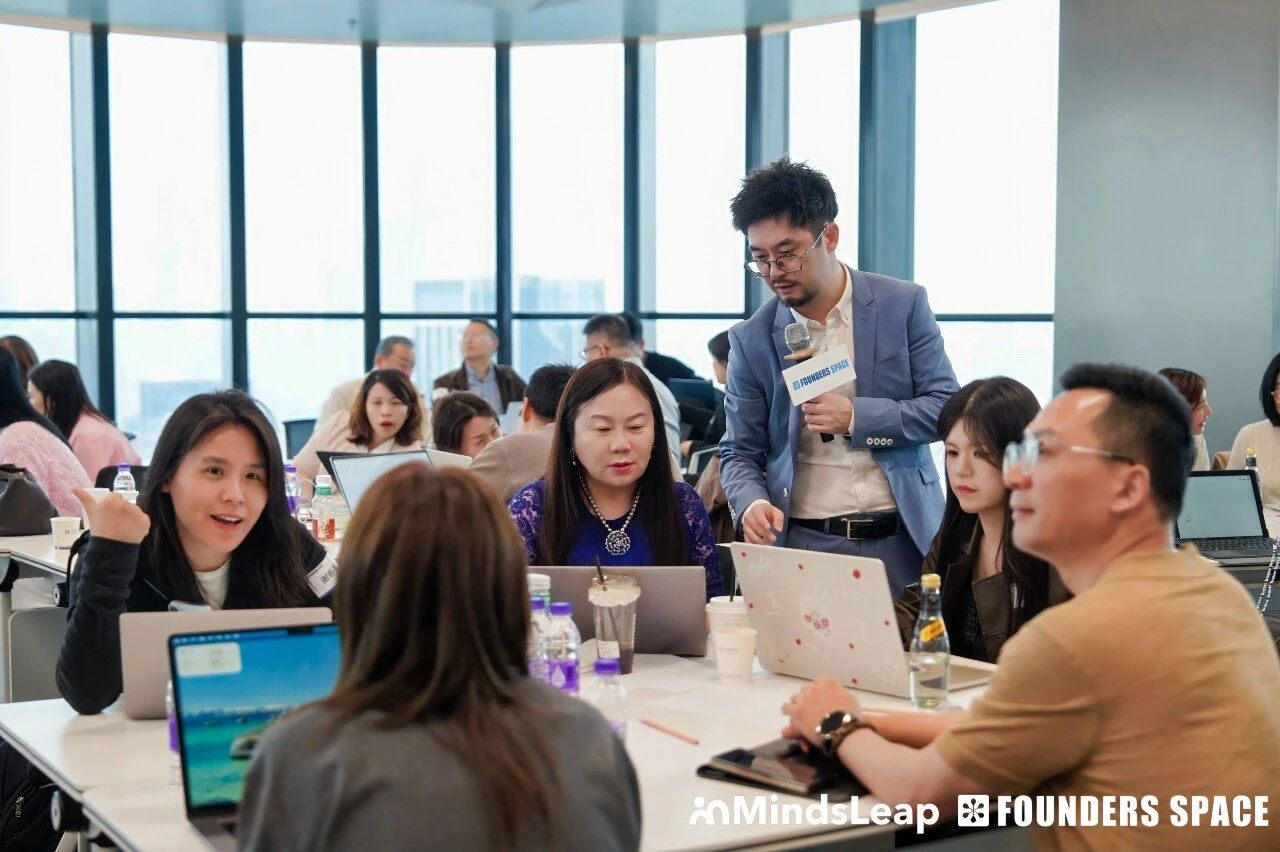
Beyond the keynote sessions, one of the most valuable parts of the Shanghai event was that members actually got hands-on and moved from understanding AI in theory to building with it directly.
At the venue, MindsLeap co-founder Yusi guided participants through installing Lobster and starting their first projects step by step. For many members, this was the first real shift from being an observer to becoming an active participant in agent-based work.
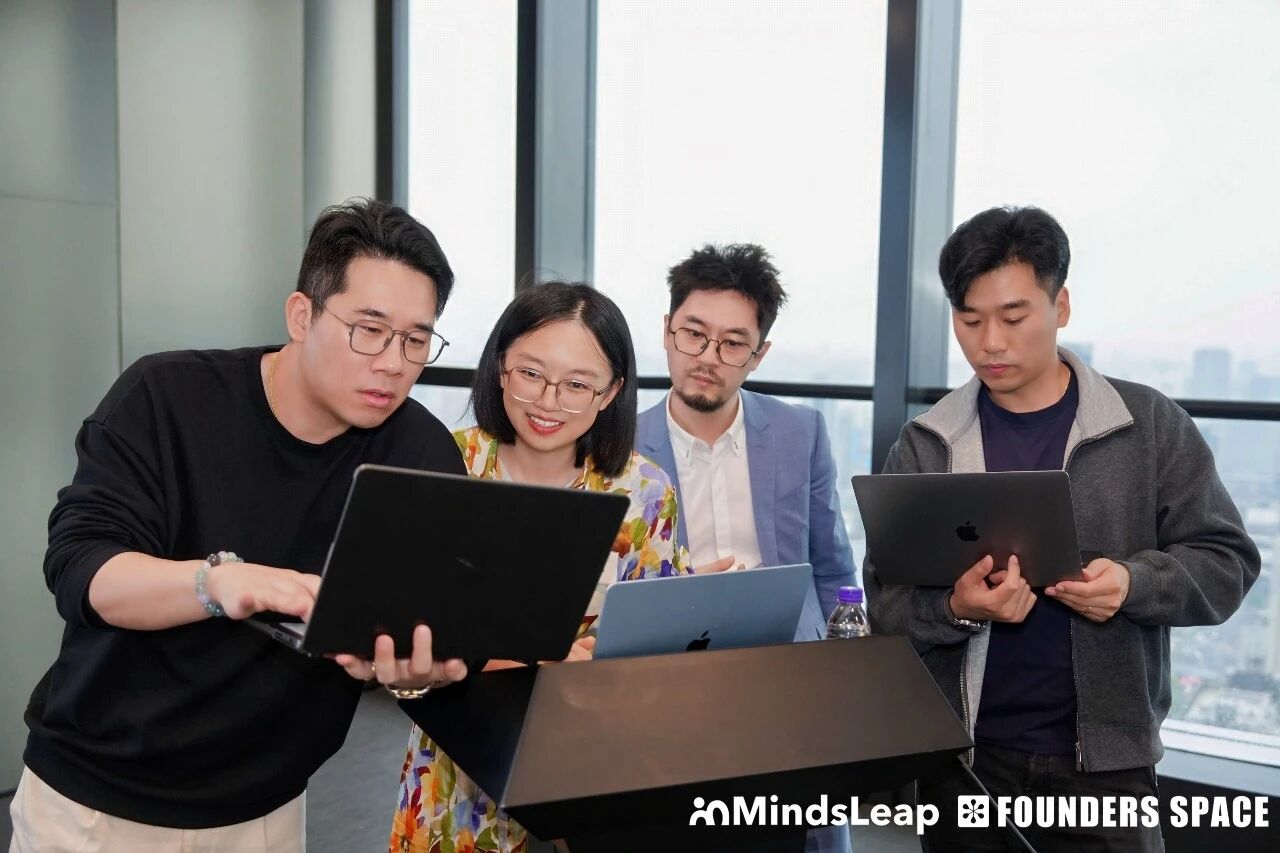
Some members completed their first AI co-created projects that very same day.
Some built their own websites. Others produced small application prototypes. A number of participants shared their results on site immediately after building them. That experience was powerful because it made one thing tangible: AI is not just a chat interface. It can become a real collaborator that helps entrepreneurs, operators, and team members turn ideas into visible outcomes in a very short time.
That is what made the AI Lobster format especially valuable. It did not just pass along ideas. It helped people take the first practical step and experience, often for the first time, the feeling that “I can build something with AI too.”
A clear conclusion from Shanghai: AI competition is becoming a systems battle
When viewed together, the sessions at AI Lobster Shanghai all addressed the same underlying question:
How can companies turn AI from something that looks impressive into a reliable, manageable, and scalable new production capability?
The shared conclusions from the event were clear:
- AI is becoming a collaborator, not just a tool
- Enterprise deployment is fundamentally a systems problem
- Security, permissions, and auditing are prerequisites, not afterthoughts
- Real business scenarios matter more than conceptual demos
- Founders and managers need to step directly into AI collaboration, not remain spectators
- Multi-agent collaboration, model routing, memory systems, and workflow orchestration are becoming standard capabilities for the next phase
From that perspective, the value of AI Lobster Shanghai was not only that it offered strong talks. It helped participants see earlier that enterprise AI competition will not be decided by isolated tool choices, but by long-term strength in organizational design, systems architecture, and execution loops.
Final thoughts
AI Lobster Shanghai showed that by 2026, enterprise AI discussions have clearly moved into a new phase.
People are no longer only asking which model is strongest. They are asking more concrete questions:
- How can AI actually participate in business operations?
- How do multiple agents collaborate?
- How do we manage cost, safety, and efficiency together?
- How do companies move from pilots to scaled deployment?
That is also why MindsLeap continues to build the Founders AI Club, study tours, and implementation-focused exchange programs. Real transformation does not happen only at the tool layer. It happens through upgrades in cognition, process design, organizational structure, and ways of working.
AI Lobster Shanghai is only the beginning. More conversations around spec-driven development, agent organizations, enterprise AI management, and industry implementation are still ahead.
About MindsLeap
MindsLeap is an enterprise AI transformation and AI-native startup acceleration platform. Through the MindsLeap Founders AI Club, AI training and strategic advisory, FDE implementation, startup acceleration, and global growth services, MindsLeap helps traditional enterprises embed AI into real business workflows and helps AI-native ventures connect with industry use cases and global markets. MindsLeap is a global partner of Founders Space.
This article was translated and adapted from the Chinese original with AI assistance.