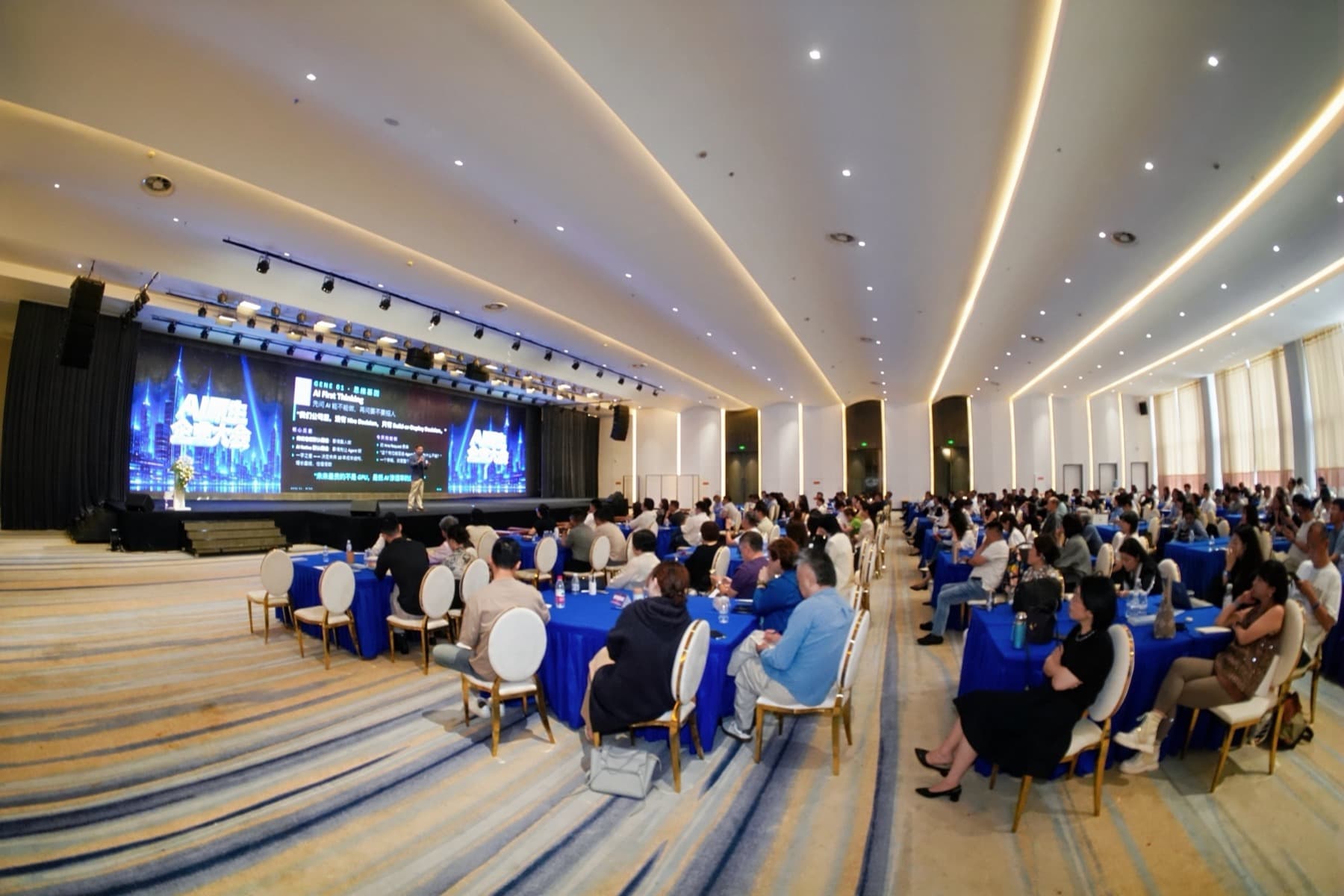
On May 23, 2026, the AI Native Enterprise Conference, co-hosted by the Shanghai Institute for Science and Enterprise Innovation, MindsLeap, Founders Space, and Xianyuan Group, concluded successfully at REMIXX International Art Center in Shanghai. Nearly 300 entrepreneurs, investors, and technology innovation experts gathered to discuss two connected questions: how Silicon Valley understands AI-native companies, and how Chinese enterprises can turn AI transformation into real organizational capability.
Opening in Hongqiao: Government, Industry, Academia, and Research Meet Around AI
The conference received strong attention and support from multiple Shanghai districts and relevant authorities. Hu Zhihong, Party Committee Member and Deputy Director of the Hongqiao International Central Business District Administrative Committee, Jin Zhengbin, Standing Committee Member of the Jinshan District Committee and Deputy District Mayor, and Ke Xiaolin, Party Group Member and Deputy District Mayor of Minhang District Government, attended the event. Hu Zhihong delivered remarks on behalf of the Hongqiao International Central Business District Administrative Committee.

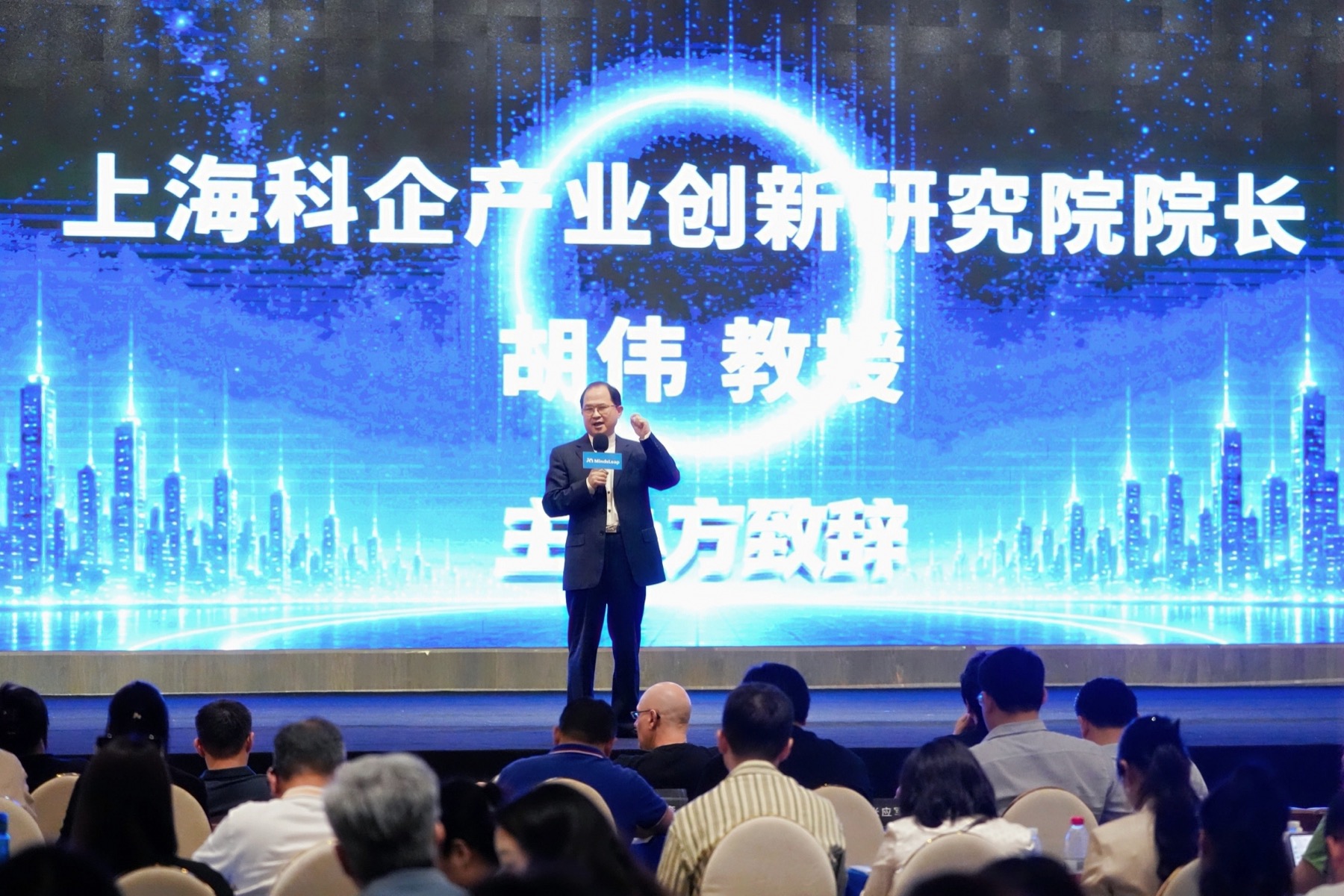
Professor Hu Wei, President of the Shanghai Institute for Science and Enterprise Innovation and former Vice Chairman of the Shanghai Federation of Social Science Associations, said in his opening remarks that the arrival of the AI era marks a new stage in human technological development. Past industrial revolutions liberated people from physical labor, he noted, while the AI revolution is reshaping intelligence itself. If humanity is to avoid being replaced or dominated by AI, he argued, the only path is deeper human-machine integration.
He emphasized that whether people like AI or not, they must learn to embrace and adapt to it. That, he said, is the meaning of learning to "dance with AI."
Morning Session: Five Core Genes of AI-Native Companies
The morning session focused on the definition and construction path of AI-native enterprises. Jeff Qian, a senior Silicon Valley investor and Stanford entrepreneurship mentor, opened the session with a keynote from an investment perspective. He proposed eleven rules for judging whether a company is truly AI-native, including whether the team can stay under ten people, whether annual recurring revenue per person can exceed one million dollars, and whether compensation levels reflect high-leverage AI productivity.
"From a Silicon Valley investment perspective, redundant headcount is not a sign of strength. It is a warning light," Qian said.
He then outlined five core genes of AI-native companies:
- Mindset: Before hiring, first ask whether AI can perform the work instead of assuming a human employee is needed.
- Metabolism: Build feedback loops around internal data; relying only on large models means feeding competitors.
- Organs: A company is no longer a simple combination of departments, but an AI collaboration network. The CEO must shift from manager to orchestrator.
- Evolution: Use AI for rapid iteration, experimentation, and solution generation.
- Symbiosis: Embrace the ecosystem and maintain high-frequency interaction with founders, large-company venture teams, and industry partners.
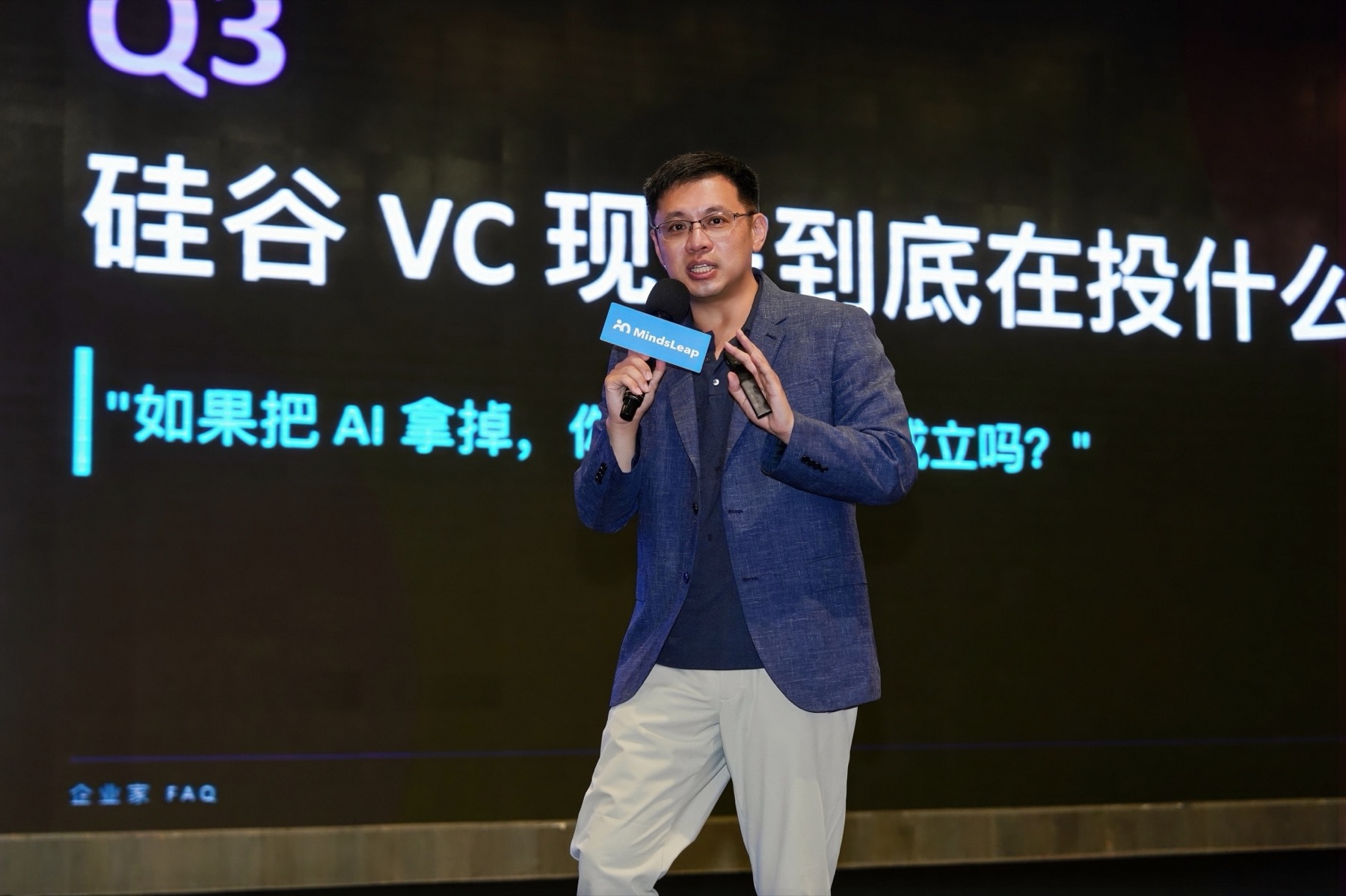
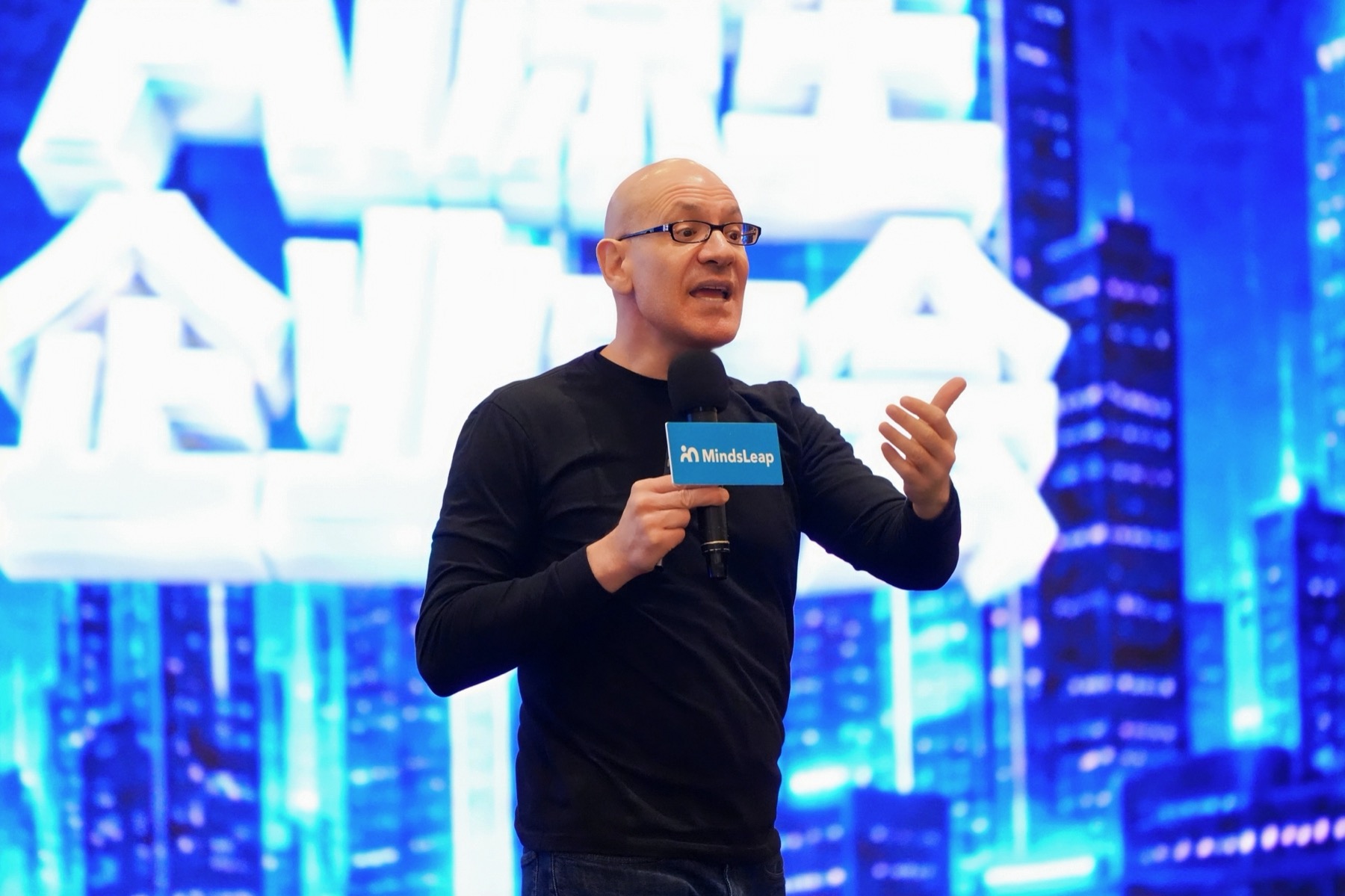
Lincoln Wang, founder of MindsLeap, then shared practical lessons from traditional enterprise AI transformation. He argued that companies moving toward AI-native operations must cross three forms of debt: cognitive debt, technical debt, and organizational debt.
"The greatest resistance is not technology. It is the reluctance to touch organizational structure," Wang said.
He proposed that enterprises should move from "AI in the loop," where human workflows remain primary and AI plays an assisting role, toward "People in the loop," where AI workflows become primary and humans fill key gaps, and eventually toward "People on the loop," where humans supervise. He also suggested creating new business units as transformation zones to force the broader organization to evolve.
Afternoon Session: Silicon Valley Practice Meets the Chinese Enterprise Path
In the afternoon, Hu Zhihong said that Hongqiao is highly compatible with the development characteristics of AI-native companies, including lightweight R&D, global collaboration, and high-frequency innovation. He noted that Hongqiao has already gathered 24,000 technology service enterprises and is building computing and data infrastructure, opening high-value application scenarios, and improving talent services to support companies throughout their growth cycle.
"Hongqiao will continue to cultivate the AI ecosystem and serve as a service provider and escort for enterprise innovation," he said.
Professor Hu Wei also offered a broader warning and outlook on the future of AI. He said that while previous industrial revolutions primarily liberated physical labor, AI brings an unprecedented intelligence revolution. If humans fail to find a good response, he warned, AI may eventually surpass and dominate human intelligence. His call was not to debate whether AI is emotionally likable, but to learn how to cooperate with it strategically and ethically through cross-disciplinary collaboration.
Hoffman: Why Do 76% of AI Projects Fail?
The highlight of the conference was Steve Hoffman, founder of Founders Space, Silicon Valley venture leader, and internationally known angel investor. Hoffman delivered two keynote speeches: one on the Silicon Valley path to AI-native enterprises, and another on Silicon Valley AI and investment trends for the second half of 2026.
Hoffman argued that many companies misunderstand enterprise AI implementation. According to him, 76% of AI projects fail for reasons such as deploying AI directly to customer-facing scenarios, relying on unsupervised AI, or launching too many AI initiatives at once.
He offered four practical recommendations:
- Treat AI as a partner, not a tool: If companies only use AI for simple Q&A, they are using less than 5% of its capability.
- Deploy AI first in back-office scenarios and keep humans in the loop: AI should not be placed directly into zero-error-tolerance processes.
- Find AI champion employees and include AI usage in performance evaluation: Leaders must model AI adoption themselves.
- Look for new business opportunities with 80% growth potential, instead of focusing only on 20% efficiency gains.
He shared the case of GenSpark AI, a company with only 20 employees that reached one million dollars in ARR within ten months because its team was AI-native and roughly 80% of its code was written with AI.
In response to the common concern that AI-generated content may feel cheap, Hoffman emphasized that companies must show customers their proprietary data, unique processes, and human expert validation. Those are the moats AI cannot easily replace.
Cui Jian: Why "+AI" Will Be Replaced by "AI+"
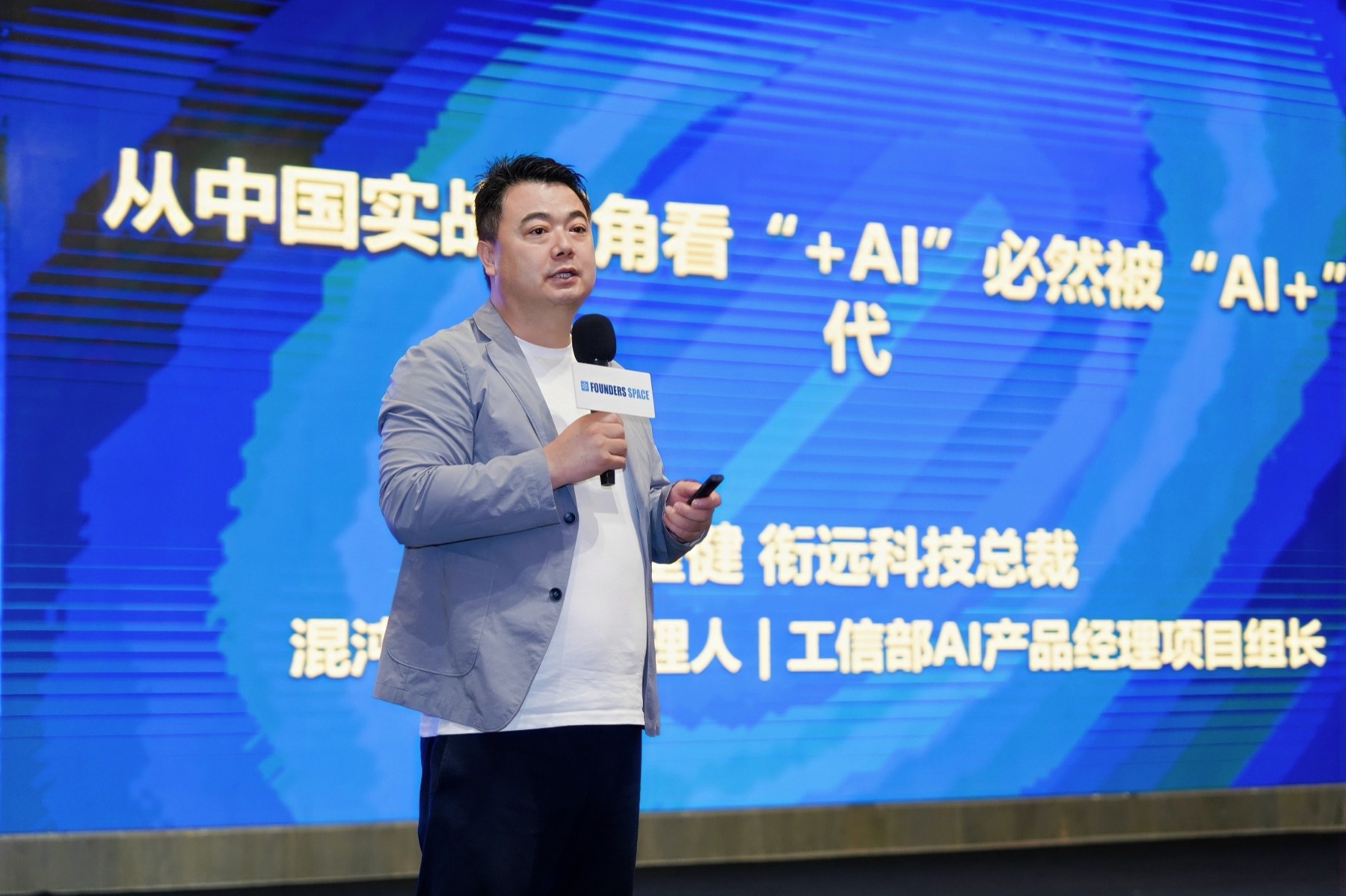
Cui Jian, President of Xianyuan Group, delivered a keynote titled "Why '+AI' Will Inevitably Be Replaced by 'AI+'." He analyzed the AI transformation challenges facing Chinese enterprises and argued that many companies spend heavily on "+AI" projects that do not change revenue, profit, or business models. Such efforts, he warned, may eventually be outcompeted by truly AI-native rivals.
He divided AI agents into four categories: life assistants, general office agents, enterprise expert agents, and embodied intelligence. He also demonstrated practical cases such as an "AI ICU coach" for meeting analysis and talent review, and physical-agent collaboration for competitor data collection and new product development.
Cui called on Chinese enterprises to take advantage of the cost benefits of domestic models and treat AI as digital labor, not merely as an IT investment. The real goal, he said, is the transition from tool adoption to productivity reconstruction.
Conference Consensus: From Cognitive Upgrade to Action
Across Silicon Valley perspectives and Chinese industry practice, from technical implementation to organizational transformation, the conference outlined a clear roadmap for AI-native transformation. Three core points emerged:
- AI is not optional; it is a survival question: The simple addition of "+AI" is reaching its limit. Competitive advantage will come from reconstructing the company around "AI+."
- Organizational transformation is the biggest bottleneck: Technology can be purchased, but organizational structure, talent models, and culture must be rebuilt from within.
- Ecosystem collaboration is essential: In the AI era, competition is no longer only company against company, but ecosystem against ecosystem.
The organizers noted that the conference was not intended to be a one-off event, but the beginning of an AI-native ecosystem. Going forward, they plan to continue hosting closed-door seminars, project roadshows, and cross-border matching programs to support Yangtze River Delta AI founders from technology incubation and commercial implementation to global expansion.
About the Organizers
Shanghai Institute for Science and Enterprise Innovation focuses on deep integration between technology and industry, building bridges between enterprises and government, and promoting cross-disciplinary collaboration and systems-level innovation.
MindsLeap connects global mentor networks with the Silicon Valley innovation ecosystem, focusing on business empowerment, global expansion, and talent strategy in the AI era.
Founders Space is a leading Silicon Valley startup incubation platform with a global partner network across more than 30 countries, dedicated to connecting Chinese and American innovation resources and capital.
Xianyuan Group focuses on enterprise strategy consulting and technology innovation ecosystem enablement, with an emphasis on business model reconstruction and organizational transformation in the AI era.
This article was translated and adapted from the Chinese original with AI assistance.