Author: Lincoln Wang | Founder & CEO, MindsLeap | Partner and CEO, Founders Space China | Founder, MindsLeap Founders AI Club
"For me, coding is solved."
The man who said that is Boris Cherny.
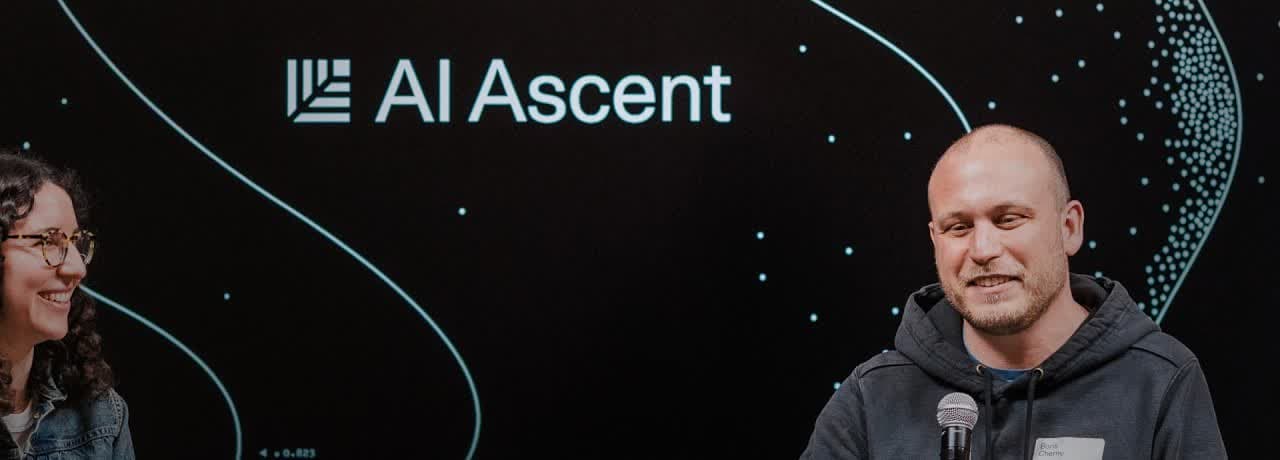
At Sequoia Capital's AI Ascent 2026 summit in early May, the creator of Claude Code sat onstage for an interview and delivered a line that made every engineer in the room sit up straight.
He hasn't written a single line of code by hand in 2026.
But he ships dozens of pull requests every day — with a personal record of 150 PRs in a single day.
From his phone.
This isn't a technical flex. It's a signal about the next structural shift in software.
An Accidental Invention
Before describing how he works today, Boris told the story of how Claude Code came to exist.
In late 2024, he joined a small incubator team inside Anthropic — just a handful of people whose mission was to build things they actually wanted. That team ended up creating three things: Claude Code, the MCP protocol, and the Claude desktop app.
"We felt there was a product overhang," Boris said. "The model could do things that no product had yet captured."
At the time, the state of the art in AI coding was autocomplete — you press Tab in your IDE, the model finishes a line. That was what Sonnet 3.5 had enabled. But Boris's bet was that the next step wasn't smarter autocomplete. It was having the agent just write all the code.
He built it. And for six months, almost nobody used it.
"It was barely usable. I used it for maybe 10% of my own code."
Then Opus 4 launched. Exponential growth started. Every model release since has added another inflection.
The insight here for entrepreneurs: Boris was building for a model that didn't exist yet. He wasn't solving today's problem. He was betting that when the model was ready, his product would be exactly what people needed.
What "Coding Is Solved" Actually Means
Boris asked the room two questions: Who writes 100% of their code by hand? Who writes 100% using AI?
He's in the second camp.
He was careful about the limits of that claim: for the type of code he writes — TypeScript and React, heavily represented in model training data — it's solved. Large, complex, obscure-language codebases? Not yet.
"Usually the answer is just: wait for the next model."
That framing is worth sitting with. Not "wait for better tooling" — wait for the next model. His planning horizon is model release cycles, not quarterly roadmaps.
Managing Hundreds of Agents From His Phone
Then he walked through his actual workflow.
Open the Claude app on his phone. On the left: a Code tab with 5–10 active sessions. Inside each session: multiple agents running in parallel.
"Right now I probably have a few hundred agents going. Every night, a few thousand doing deeper work."
The thing he's most excited about: /loop.
The concept is almost comically simple. You ask Claude to use cron to schedule a recurring job — every minute, every five minutes, every day. Claude keeps doing the task on that schedule until you tell it to stop.
Boris currently has dozens of loops running:
- One babysitting all his PRs, auto-fixing CI, auto-rebasing
- One keeping the test suite healthy
- One pulling Twitter feedback every 30 minutes, clustering it, and sending him a summary
"I feel like loops are the future. If you haven't tried it, I highly recommend it."
What this means to me: the work that used to require a team now becomes a set of scheduled loops. The human role shifts from executor to scheduler and reviewer.
The Printing Press Moment
This was my favorite part of the talk.
An audience member asked: Will coding become a universal skill, like knowing Microsoft Office?
Boris said: Yes. And it'll go further than that.
He used a historical analogy: the printing press, 1400s Europe.
Before Gutenberg, roughly 10% of the European population was literate. They were employed by kings and lords who couldn't read — their job was to handle written communication on their behalf.
In the fifty years after the printing press was invented, more literature was published in Europe than in the previous thousand years. The cost of a book dropped a hundredfold.
Over the next few centuries, literacy went from 10% to 70% globally.
"I think what's about to happen," Boris said, "is that software will be fully democratized. Anyone will be able to build it. And it's going to happen much faster than a few hundred years."
His concrete example: the best person to write accounting software in the future probably isn't an engineer. It's a great accountant — because domain knowledge is the hard part, and coding becomes the easy part.
That inversion has implications for every industry worth thinking about.
The SaaS Moat Is Shifting
Boris was asked the pointed question: if software becomes this cheap to build, what happens to SaaS value? Are we headed for a SaaS apocalypse?
He gave a structured answer rooted in Hamilton Helmer's "seven powers" framework.
Moats that are getting weaker:
- Switching costs — AI can help port your data from one system to another
- Process power — companies whose moat is complex internal workflows will find AI eroding that
Moats that remain strong:
- Network effects
- Scale economies
- Cornered resources
Then the second observation: the number of disruptive startups in the next ten years will be ten times what we saw in the last ten.
Because a small team can now build product capabilities that match a large company's — and compete head-to-head. Large companies have to retrain people, overhaul processes, overcome internal resistance. Startups starting fresh have none of that burden.
"It's the best time to build. The best time to be a startup."
The Gap That Actually Matters
One of the most unexpected moments came when someone asked: Does Anthropic have access to better models than the rest of us?
Boris's answer: No.
"We use the same models everyone else does. That's not where our advantage is."
"The real gap is organizational."
He described how Anthropic operates internally:
- Everyone writes code — PMs, designers, data scientists, finance, user researchers
- Not a single line of SQL is written by a human
- Agents from different people communicate over Slack to coordinate unknowns
- All software is built by models
"We're ahead not in technology — the same tech is available to everyone here. We're ahead in how we've reorganized the way we work. And that's something every company can learn."
This lands at the exact center of what MindsLeap exists to help with. AI transformation isn't buying a new set of tools. It's changing the way work gets done.
A Final Thought
Boris Cherny isn't a big-picture theorist. Everything he said onstage, he's actually doing.
150 PRs in a day. Hundreds of parallel agents. Managing all his engineering work from his phone.
He's not describing the future. He's describing his present.
And the printing press analogy places the historical weight of this moment in the right frame:
Literacy took centuries to go from 10% to 70%.
The democratization of software might take years.
The gap between people who can turn ideas into working software — and those who can't — is about to widen faster than most people expect.
About MindsLeap
MindsLeap is an enterprise AI transformation and AI-native startup acceleration platform. Through the MindsLeap Founders AI Club, AI training and strategic advisory, FDE implementation, startup acceleration, and global growth services, MindsLeap helps traditional enterprises embed AI into real business workflows and helps AI-native ventures connect with industry use cases and global markets. MindsLeap is a global partner of Founders Space.
Source:
- Boris Cherny's full talk at Sequoia AI Ascent 2026: youtube.com/watch?v=SlGRN8jh2RI