Author: Lincoln Wang | Founder & CEO, MindsLeap | Partner and CEO, Founders Space China | Founder, MindsLeap Founders AI Club
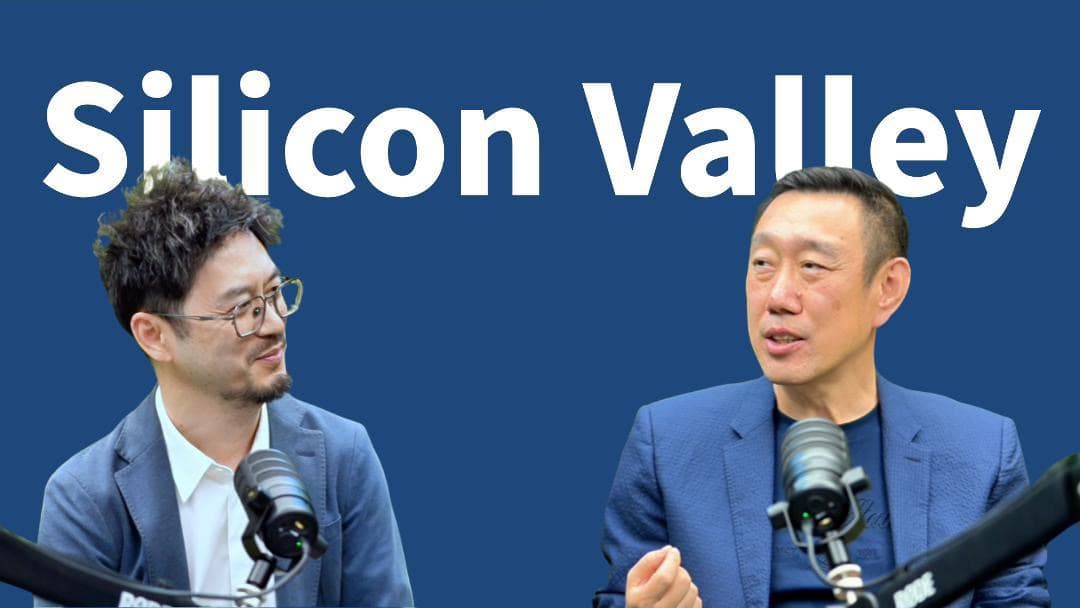
In this Founders Talk conversation, MindsLeap invited Jin Yisu to share his story and observations.
Jin is the founder of IntelliPro Group and the Silicon Valley Leadership Community, and has been recognized by Forbes China as one of the most influential Chinese leaders. He moved to the United States in 1997, entered Silicon Valley in 2000, and has lived through multiple technology cycles, from enterprise software and the internet to mobile and now AI.
The conversation connects Jin's personal journey, his understanding of Silicon Valley, and his view of the AI-driven reshaping of work.
Humility as a Long-Term Operating System
When Jin introduced himself, he began with the meaning of his name. "Yisu" comes from the Chinese phrase "a grain in the vast ocean." His father, a professor of classical Chinese, chose the name with an expectation: stay humble, stay curious, and keep learning.
That might sound like a family story, but it became a deeper theme of the conversation.
To survive in Silicon Valley for decades, technical ability is not enough. Companies rise and disappear. Technologies become fashionable and then obsolete. Capital and attention move quickly. People who last through cycles often share one capability: the willingness to keep learning and reset themselves.
In that sense, Jin's name almost became a metaphor for his entrepreneurial path. Stay humble, but keep moving. Know that you are small, but still step into the biggest waves.
From UIUC to Siebel: Seeing How Silicon Valley Gathers Talent
Jin studied mathematics at the University of Illinois Urbana-Champaign. In 2000, he moved to Silicon Valley and joined Siebel Systems.
Many younger readers may no longer know Siebel, but at the time it was one of the world's most important CRM software companies, later acquired by Oracle. For a young engineer entering Silicon Valley, joining Siebel meant standing close to the center of the enterprise software wave.
He recalled the interview process as a full day of whiteboard coding, algorithms, and reasoning questions. Even then, Silicon Valley had already built a highly concentrated talent competition system: strong engineers, ambitious founders, and risk-seeking capital were colliding in the same place.
When I asked Jin how he defines the spirit of Silicon Valley, he did not stop at the usual answer of "innovation."
For him, the deeper core is openness. Silicon Valley is open-minded: willing to accept new ideas, new thinking, and new technologies, and willing to try things before they are fully proven. It also values the individual. Every person can be a contributor. What matters most is not background, but original thinking, problem-solving ability, and the capacity to turn ideas into business practice.
That is why Silicon Valley keeps attracting global talent. It is not successful because of one company. It is successful because it has built an ecosystem where talent, capital, technology, and risk-taking can keep moving.
A BI Project That Led to Entrepreneurship
Jin did not begin entrepreneurship with a grand plan.
While working in a large technology company, he participated in a business intelligence and data warehouse project. This was before today's AI era, but BI and data mining were already important ways for companies to discover growth opportunities. In its first year after launch, the project helped generate more than $240 million in revenue growth.
That experience gave him a simple thought: if this kind of technology could create such value for one company, perhaps it could be replicated for many companies.
So he started a business.
The beginning was far from glamorous. As a Chinese founder in the United States, he had no funding, no customers, no team, and no reference accounts. He called companies seeking cooperation and was rejected again and again. Prospects would ask: How long has your company existed? How many employees do you have? What is your revenue? Can you show three Fortune 500 reference accounts?
For a company that had been founded only a few months earlier and had only one employee, none of those questions had a good answer.
But during one call, he said something that changed the conversation. Every human being starts as a newborn baby, he told the prospect. This company is my newborn baby. If I love her, if others are willing to give her a chance, one day she will grow up.
The person on the other end paused, then asked him to send over the materials.
That was not standard sales language. It was early entrepreneurship in its rawest form: when you have no brand, no proof, and no institutional backing, what you still have is conviction, sincerity, and the willingness to take responsibility.
From a $500 Project to Becoming a Google Supplier
In the early days, Jin accepted very small projects. One paid only $500. Another had already failed with another team and came with half the original budget. Some projects were clearly unprofitable, but he took them anyway because without a chance, there would be no trust to build.
That is how many real companies begin: not with a perfect model, but by earning trust through work that looks too small to matter.
He started the company in a tiny storage room. Only in the fifth or sixth year did he move into a larger office. Over time, he realized that pure project outsourcing was not scalable enough, so the business evolved toward talent and IT outsourcing. By placing engineers with clients, he created more space to think, expand, and build the organization.
The turning point came with Google.
Google was looking for talent related to BI and data warehousing and had already interviewed many candidates without success. Jin submitted only three resumes. All three received offers. Google saw the quality of his talent judgment, first accepted IntelliPro as a trial supplier, and later converted it into a formal supplier.
There is an important lesson here:
For many B2B companies, the real beginning is not proving how big you are. It is delivering once at such high quality that the customer redefines who you are.
From there, IntelliPro became more than a recruiting or outsourcing company. It became a platform for identifying, allocating, and connecting high-quality talent across global companies.
Organization Building Starts With Seeing People Clearly
One story from the interview captures Jin's approach to organization building.
In the early days, he felt he needed someone who could represent the company in a more native American business context. The first white employee he hired was the person who sold him a car.
She did not come from a conventional technology consulting background. But after joining, she created the company's first process sheets in Excel, helping the team standardize resumes, interviews, offers, and customer engagement. Later, when the company's email server failed and Jin himself could not fix it, she solved the problem in minutes. Only then did he discover that before marriage, she had been an IBM Lotus administrator.
The story is almost a small Silicon Valley parable: you never know what capability sits behind a person.
For founders, this matters. Early organization building often depends on recognizing value in people who do not look standard, do not fit the original plan, or do not arrive with the expected label. Put the right person in the right place, and hidden capability can become organizational leverage.
That also echoes Jin's definition of Silicon Valley: openness, respect for the individual, and the belief that every person may become a contributor.
AI and the Talent Market: Not Just Layoffs, but Resource Reallocation
In the latter part of the conversation, we focused on AI and the labor market.
The most visible story is layoffs: large technology companies cutting roles, fewer entry-level positions, and new graduates facing a harder path into traditional jobs. Jin does not deny those trends. But from inside the talent services industry, he sees another side: because of AI's rapid progress, more companies are also hiring.
Demand is not limited to AI-native companies and foundation model labs. It also comes from AI application companies, chips, computing infrastructure, data centers, energy, and physical infrastructure. Even companies involved in digging trenches and laying cables are benefiting from AI infrastructure growth.
This suggests that AI is not changing one sector. It is reshuffling many sectors at once.
Jin's judgment is important: AI is not a short-term event, but a longer-term trend. Social progress repeatedly reallocates resources. It eliminates outdated productivity, activates new productivity, and moves capable people and capital toward more promising industries. AI is accelerating that reallocation.
For companies, this means AI transformation should not be understood only as using tools to reduce cost or increase efficiency. It is a systematic upgrade of organizational capability, role design, and talent allocation.
For individuals, AI is not only changing one job title. It is changing the structure of capability itself. The key question becomes: can you keep moving yourself toward work with higher productivity and greater future relevance?
Final Thoughts
Jin Yisu's story is worth publishing as one integrated article because it connects several layers:
- A Chinese founder's long entrepreneurial path in Silicon Valley
- The evolution from a tiny storage-room startup to a global talent services company
- A first-hand view of how AI is reshaping hiring and labor allocation
- A definition of Silicon Valley built around openness, individual contribution, original thinking, and risk-taking
When we discuss AI today, it is easy to focus only on model capabilities, product launches, and job replacement. Jin's perspective points to something deeper: talent moves, organizations restructure, new infrastructure rises, new companies emerge, and individuals must redefine where their value belongs.
That is exactly what Silicon Valley has repeatedly experienced for decades.
Technology waves do not wait until people are ready. They create disorder, reallocate resources, and then leave behind new industrial structures. For founders and executives, the point is not to avoid change. It is to understand how change happens and move yourself and your organization toward the next direction of productivity.
About Founders Talk
Founders Talk is an interview program created by Lincoln, founder of MindsLeap. It invites influential founders, entrepreneurs, AI experts, investors, creators, and global innovation practitioners in the AI era to discuss frontier technology, business models, enterprise AI transformation, and cross-market opportunities.
The program helps audiences understand global frontier technology trends and gain first-hand insight into enterprise AI transformation. Rather than only following headlines, Founders Talk focuses on lived experience, key judgments, and practical methods from people building and leading at the edge of change.
About MindsLeap
MindsLeap is an enterprise AI transformation and AI-native startup acceleration platform. Through the MindsLeap Founders AI Club, AI training and strategic advisory, FDE implementation, startup acceleration, and global growth services, MindsLeap helps traditional enterprises embed AI into real business workflows and helps AI-native ventures connect with industry use cases and global markets. MindsLeap is a global partner of Founders Space.
This article was translated and adapted from the Chinese original with AI assistance.