Author: Lincoln Wang | Founder & CEO, MindsLeap | Partner and CEO, Founders Space China | Founder, MindsLeap Founders AI Club
"I haven't written a single line of code by hand, and I've never felt more excited about programming."
The person who said that is Andrej Karpathy.
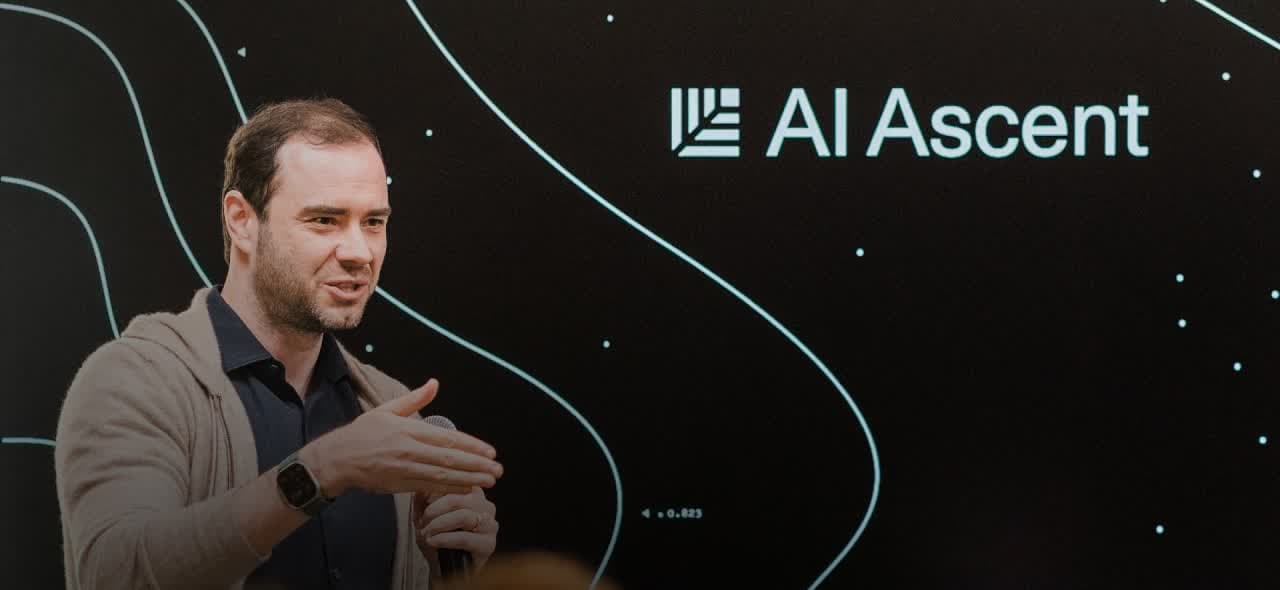
In late April 2026, at Sequoia Capital's AI Ascent summit, this co-founding member of OpenAI, former head of AI at Tesla, and one of the most influential thinkers in the global AI space, spent an hour and a half on stage.
He named a new era of software: Software 3.0.
Then he explained seventy years of paradigm shifts in three lines:
Software 1.0: Humans write rules, machines execute. Software 2.0: Humans manage data, machines learn the rules. Software 3.0: Humans state intent, machines just do it.
Three lines. Done.
But the real reason this talk matters isn't those three lines. It's the two stories he used to illustrate them.
An App That Should Never Have Existed
Karpathy told a story about his own experience.
He went to a restaurant where the menu had no pictures — just text descriptions. He had no idea what the dishes looked like.
So he went back and built a small app — MenuGen: take a photo of the menu, use OCR to extract dish names, call an image generation API to produce a picture for each dish, render a complete illustrated menu interface.
It worked well.
Then one day, he saw what someone else did.
That person simply sent the same menu photo to Gemini and said one sentence: "Overlay an image of each dish onto this menu photo."
The model returned a single image — the original menu photo, now with a picture of the actual dish next to each item.
Karpathy said something that stuck with me:
That app of mine should never have existed.
The entire software stack was scaffolding — doing for a neural network what it can now do directly. In a Software 3.0 world, those middle layers are redundant.
But AI-Written Code Can Also Plant Mines
At this point, the story sounds like a triumphant "AI can do everything" narrative.
But Karpathy didn't stop at romanticism.
He immediately followed with another story — a pitfall he fell into himself.
He asked AI to write a payment logic flow for him. The AI's solution: match the Stripe email with the Google login email to identify the user. But those two emails could easily be different. The result? A user might pay but never receive the credits they purchased.
His comment: It was reasonable code, but terrible system design. Someone without engineering judgment would never have caught it.
This story led to an important distinction he drew in the talk:
Vibe Coding raises the floor — with AI, almost anyone can describe what they want and get a working result. This is an unprecedented form of democratization.
Agentic Engineering raises the ceiling — when AI truly participates in serious engineering work, you need to know how to design specifications, review AI output, spot system-level errors, and manage safety boundaries.
His prediction: the efficiency advantage for people who truly master agentic workflows may be far greater than "10x." The number could be much bigger.
Flashback to 2017: The "Prophecy" Nobody Believed
To understand why what Karpathy is saying today matters, you have to go back to 2017.
Back then, he was at Tesla, leading AI development for the Autopilot self-driving system. He noticed something strange: his engineering team was writing less and less code like "if a pedestrian is detected, execute brake logic." Instead, they were curating data, labeling datasets, and designing training objectives.
The logic of the program was being "encoded" into the weights of a neural network — not written in source files.
He wrote about this observation in an article titled Software 2.0.
Neural networks are not just another classifier. They represent a fundamental shift in how software is developed.
Back then, many people dismissed it as hype.
But looking back now, self-driving cars, image recognition, speech synthesis, recommendation algorithms — we already live in a Software 2.0 world.
That article was a map that has already been realized.
And what he described at AI Ascent — Software 3.0 — is the next map, currently unfolding.
The One Thing You Can't Outsource
At the end of his talk, Karpathy quoted a tweet from this year that he found unforgettable:
"You can outsource your thinking, but you can't outsource your understanding."
The more AI does, the more your ability to sense direction, judge quality, and understand what should be done becomes the truly scarce resource.
For business leaders, this is a very practical signal:
AI transformation isn't just about buying tools and deploying systems. It's an upgrade in judgment. The ability to spot where AI is going off track — the ability to define what "done well" looks like — is becoming more and more important.
Final Thoughts
Karpathy has a rare gift: he sees the outline of things before they happen, and by the time everyone else sees it, he's already standing somewhere else.
The Software 2.0 of 2017 was a map that has already been realized.
The Software 3.0 of 2026 is the next map, currently unfolding.
For entrepreneurs and leaders thinking about AI transformation, the people who read this map and the people who don't — their paths over the next few years will diverge more and more.
This article was translated and adapted from the Chinese original with AI assistance.
About MindsLeap
MindsLeap is a China partner of Silicon Valley's renowned Founders Space, dedicated to connecting cutting-edge global AI innovation resources with the real transformation needs of Chinese entrepreneurs. We focus on AI strategy, entrepreneur communities, global innovation study tours, and executive training — helping enterprises build stronger cognition, methodology, and action capability in the AI era.
Sources:
- Karpathy's full talk at Sequoia AI Ascent 2026: youtube.com/watch?v=96jN2OCOfLs
- Karpathy's own transcript and summary: karpathy.bearblog.dev/sequoia-ascent-2026
- Software 2.0 original article (2017): karpathy.medium.com/software-2-0