Author: Lincoln Wang | Founder & CEO, MindsLeap | Partner and CEO, Founders Space China | Founder, MindsLeap Founders AI Club
"Forty years later, Microsoft and NVIDIA are going to reinvent the PC."
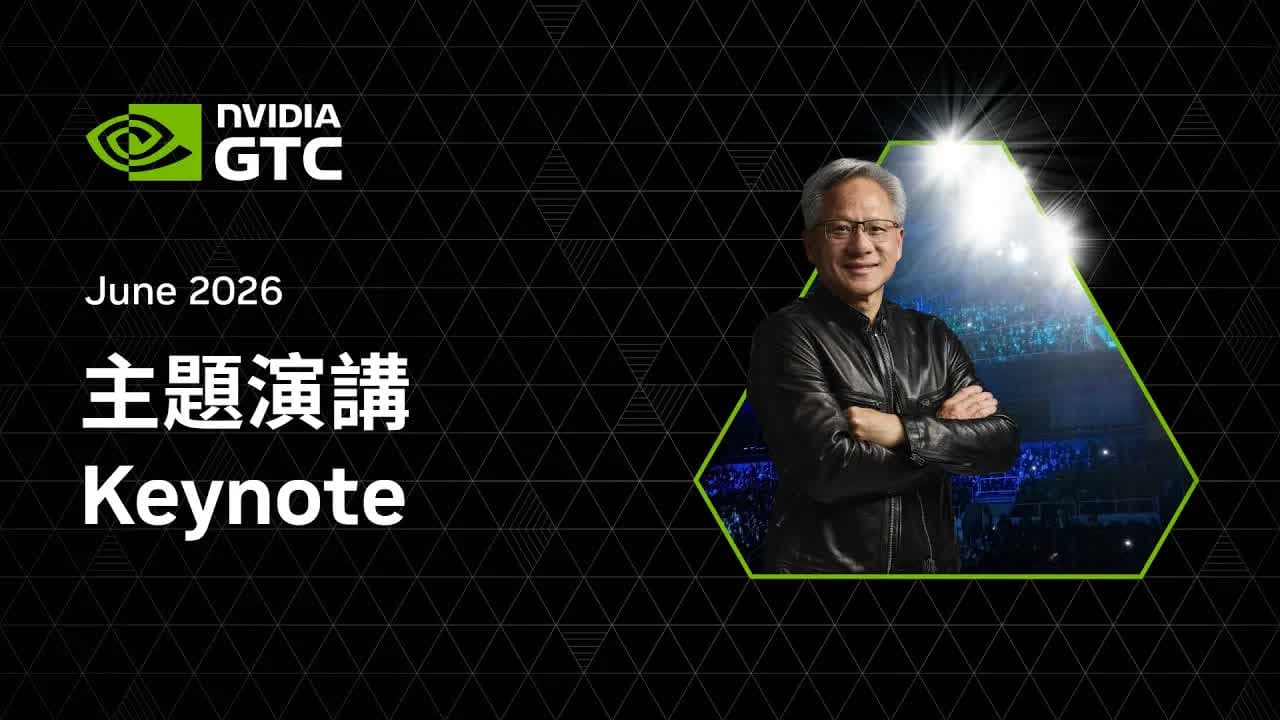
That may be the line from Jensen Huang's GTC Taipei 2026 keynote that entrepreneurs should sit with the longest.
The keynote had chips, AI factories, data centers, and NVIDIA's familiar ecosystem storytelling. But if we only treat it as a hardware launch, we miss the deeper thread Huang was drawing:
AI agents will not live only in the cloud.
They will enter enterprise systems, enter workflows, and eventually enter every personal computer.
That means the PC may no longer be merely a tool for opening software, clicking menus, and typing text. It could become a machine that runs local agents, connects to cloud models, coordinates your files and applications, and keeps working on your behalf.
If the mobile internet changed what the word "phone" meant over the past decade, Huang is now betting that the next decade will do the same to the word "PC."
Useful AI Has Arrived
Huang began with a seemingly ordinary example: GitHub.
He looked back to two years ago, when he began talking about the next wave after generative AI: AI agents. Today, he gave a very clear judgment:
"AI agents are here. Useful AI is here."
Why start with GitHub?
Because software development is one of the first places where AI agents have truly entered production workflows. Tens of millions of professional software engineers download code, modify code, and submit pull requests every day. Huang noted that GitHub had 300 million commits in 2023, 400 million in 2024, and in the first months of 2026 was already approaching a threefold increase.
This is not a story about whether programmers will lose their jobs.
His view is almost the opposite: if AI amplifies every software engineer's output, companies may want to hire more engineers who can command AI, because the same salary can now unlock multiple times the previous output.
Behind that statement is a larger shift: AI is moving from a model that answers questions to a working unit that completes tasks.
That is why the PC matters.
When AI moves from chat boxes into workflows, it cannot remain forever in a distant cloud. It needs to be near your files, your applications, your device, your permission boundaries, and even your daily habits.
Agents Will Not Only Live in the Cloud
Huang said something important in the keynote:
"This computing model called agents will run in AI clouds, inside enterprises, and on your PC."
That sentence connects many product changes from the past year.
Cloud models will continue to exist. Private enterprise deployments will become more common. But the third location, the personal computer, has been underestimated.
Why?
Over the past 20 years, the PC has become, in many people's minds, an entry device. The real computing is in the cloud. The real service is in SaaS. The PC is merely a carrier for browsers, office tools, and meetings.
Agents change that logic.
An agent needs to see files, call software, switch between tools, use browsers, process data, control graphics tools, and interact with enterprise systems. It does not only need an API. It needs an environment in which it can act.
One of the most natural places for that environment is the PC.
The interesting part of RTX Spark is not only its specifications. It is that Huang described it as a personal machine that can run agents locally. It can connect to cloud models and run local models. It can open tools on the user's computer. It can keep working inside a secure sandbox.
This is not just a faster computer.
It is a redefinition of the PC's role.
A New Operating System: Windows Plus Large Language Models
Huang's way of talking about the PC was revealing. He did not only talk about GPUs or Windows. He broke PC history into layers of abstraction.
Why was Windows 95 important? Not only because it had an interface, but because it turned the PC from an enterprise device into a consumer electronics device. It had system BIOS, open chipsets, drivers, runtime installation, and multimedia APIs. Each abstraction layer allowed more hardware, more software, and more developers into the ecosystem.
Then Huang said:
"The new operating system is, of course, the old operating system plus large language models."
That line matters.
In the past, we understood an operating system as something that manages hardware, files, processes, networks, and permissions. The future operating system may also need to manage agents: what they can see, what they can call, what they can do on your behalf, and when they must stop and ask for confirmation.
Huang even compared large language models to a modern version of DirectX.
"In many ways, large language models are the modern DirectX."
The analogy is precise. DirectX was not just ordinary software. It gave games and multimedia applications a unified capability layer, so developers did not have to deal directly with complex hardware. Today, large language models are playing a similar role: they unify natural language, images, audio, video, code, and tool use into a new intelligent layer.
Then Huang went further:
"Applications are going to be replaced by agent runtimes. A modern application is an agent."
That sentence should make software companies uncomfortable.
If users no longer open your application directly, but ask their own agents to call your capabilities; if interfaces are no longer about people clicking buttons, but about agents completing chains of actions in the background; if software value is no longer only in the UI, but in whether the software can be understood, called, constrained, and audited by agents, then many SaaS products will need to be redesigned.
A Personal Agent Machine That Can Work 24 Hours a Day
Huang then showed a concrete scenario: designing a house.
In the demo, a user provided a site, a concept sketch, a mood board, and written requirements. An agent running on RTX Spark began using tools on the laptop. It opened Rhino, modeled the site, handled terrain and setbacks, generated building massing, moved into interior layout, and automatically placed doors, windows, and structural elements.
Humans could intervene in the middle.
The agent also discovered its own mistakes and corrected them.
Finally, it exported the model from Rhino to Blender, preserved the design context, and used generative AI to create photorealistic renderings.
This was not a chatbot.
It was a local workflow agent that could use professional tools, move context across multiple applications, and keep humans involved at key checkpoints.
Huang said Adobe is also rebuilding the core architecture of Photoshop and Premiere so they can interact with agents on a laptop through MCP servers. That makes this more than a one-off demo. It suggests that the software ecosystem itself is moving toward being agent-callable.
For entrepreneurs, the most important point is not the architecture case itself. It is the product form behind it:
Humans define intent. Agents operate tools.
Humans make judgments. Agents execute workflows.
Humans are no longer merely software users. They become directors of workflows.
The Meaning of "No Token Anxiety"
When Huang talked about desktop devices, he used a casual but important phrase: agents can run locally 24 hours a day without "token anxiety."
That small phrase matters.
For many companies experimenting with AI, the biggest issue is not whether a single call is expensive. It is that they do not know what the cost will look like once the system runs continuously. An agent that observes, remembers, retrieves, and executes over time has a very different cost model from one-time question answering.
If part of an agent's capability can run on a local PC, the equation changes.
It can be closer to data, closer to applications, and closer to user permissions. It can also move some inference and tool use from the cloud back to the local machine, reducing latency and privacy concerns, and turning the agent into a long-running assistant rather than a web service that must be restarted every time.
That is why NVIDIA placed RTX, Windows, CUDA, Tensor Cores, Adobe, MCP, cloud models, and local models into one picture.
It is not trying to define a new computer.
It is trying to define the runtime environment for personal agents.
The PC May Become Something Else, Just as the Phone Did
Huang used a helpful analogy. Fifteen to 20 years ago, we had something called a phone. We still call it a phone today, but making phone calls is one of the things we do least with it.
Then he said:
"I am absolutely certain that the PC 10 years from now is going to be vastly different than what you know the PC to be today."
That may be the most important judgment in the keynote.
The word PC will not disappear, just as the word phone did not disappear. But the object it points to will change.
The old PC was where people opened applications, clicked menus, and typed commands.
The future PC may be where agents live, understand your files and tasks, call local and cloud models, and help you complete work across software. You will still have desktops, laptops, and workstations, but they will no longer be only tools in front of a screen. They will become containers for personal AI.
For companies, this raises practical questions.
Can your product be used by agents?
Can your internal systems be safely exposed to agents?
Can your data permissions, approval processes, and audit logs support a workflow agent that runs 24 hours a day?
Will your employees be using software, or managing a group of agents?
These questions may sound early. But when PCs began spreading 40 years ago, most companies did not yet realize that personal computers would rewrite offices, finance, sales, design, manufacturing, and software development.
Closing Thought
At GTC Taipei, Taiwan's supply chain mattered. AI factories mattered. Vera Rubin mattered. Robotics and physical AI mattered.
But in this article, I want to hold onto the judgment in Huang's latest keynote that sits closest to everyday work:
AI agents will enter the PC.
When that happens, AI will no longer be only a dialogue box in a browser, or only a cloud service purchased by the enterprise. It will enter the work interface every person knows best, and the most complex workflows inside every company.
That will make the PC a strategic entry point again.
It will also bring software back to a fundamental question: is your product designed for people to click, or for agents to call?
For Chinese entrepreneurs, this question is worth thinking about now.
Real change usually does not begin with a concept.
It begins when an old tool suddenly becomes a new thing.
The PC may be next.
Source Note
This article was interpreted by Lincoln based on NVIDIA's official channel video NVIDIA GTC Taipei 2026 Keynote | Live, published on June 1, 2026.
About MindsLeap
MindsLeap is an AI transformation accelerator that helps traditional entrepreneurs find transformation paths in the AI era. In partnership with Silicon Valley incubator Founders Space, MindsLeap connects technology founders with real customers and scenarios, links domestic and international capital with the Silicon Valley technology ecosystem, and supports China's industrial AI transformation and global expansion.
This article was translated and adapted from the Chinese original with AI assistance.