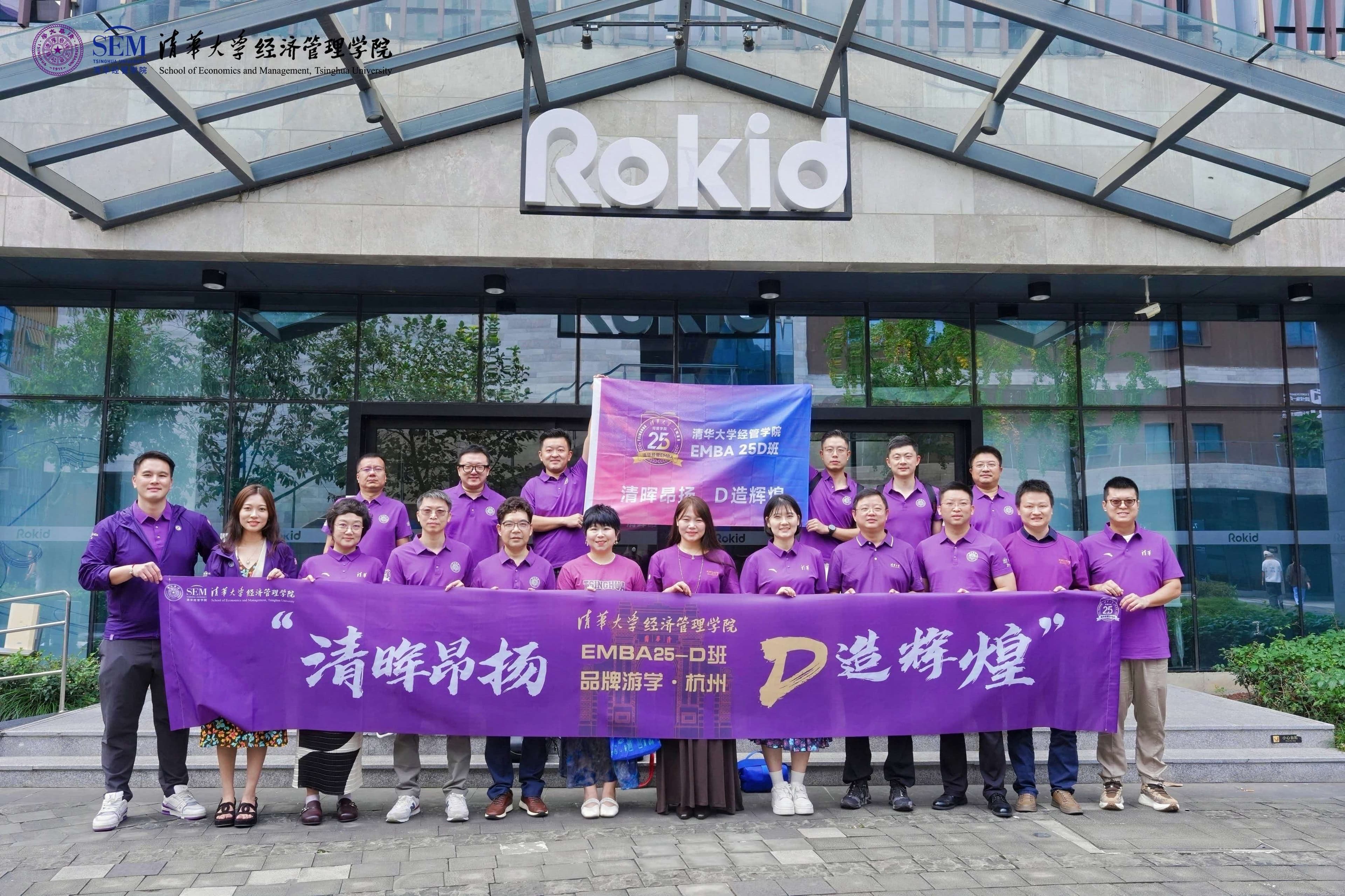
September 21–23, 2026 | Hangzhou, China
From September 21 to 23, 2026, MindsLeap delivered an AI study tour in Hangzhou for the Tsinghua SEM EMBA 25D class. The program connected frontier AI technology visits with sessions on AI-native organizations, hands-on construction of an entrepreneur AI second brain, and enterprise GEO strategy.
The study tour treated AI as more than a technology topic. It followed a practical sequence: see real technologies, understand organizational change, and build personal and enterprise capabilities through hands-on work.
Seeing AI in Real-World Contexts at Rokid and BrainCo
The tour included visits to Rokid (灵伴科技) and BrainCo (强脑科技). These visits gave participants the opportunity to observe AI from the perspectives of products, interaction, and industry applications: from new forms of human-computer interaction through AI glasses to brain-computer interfaces and intelligent hardware.
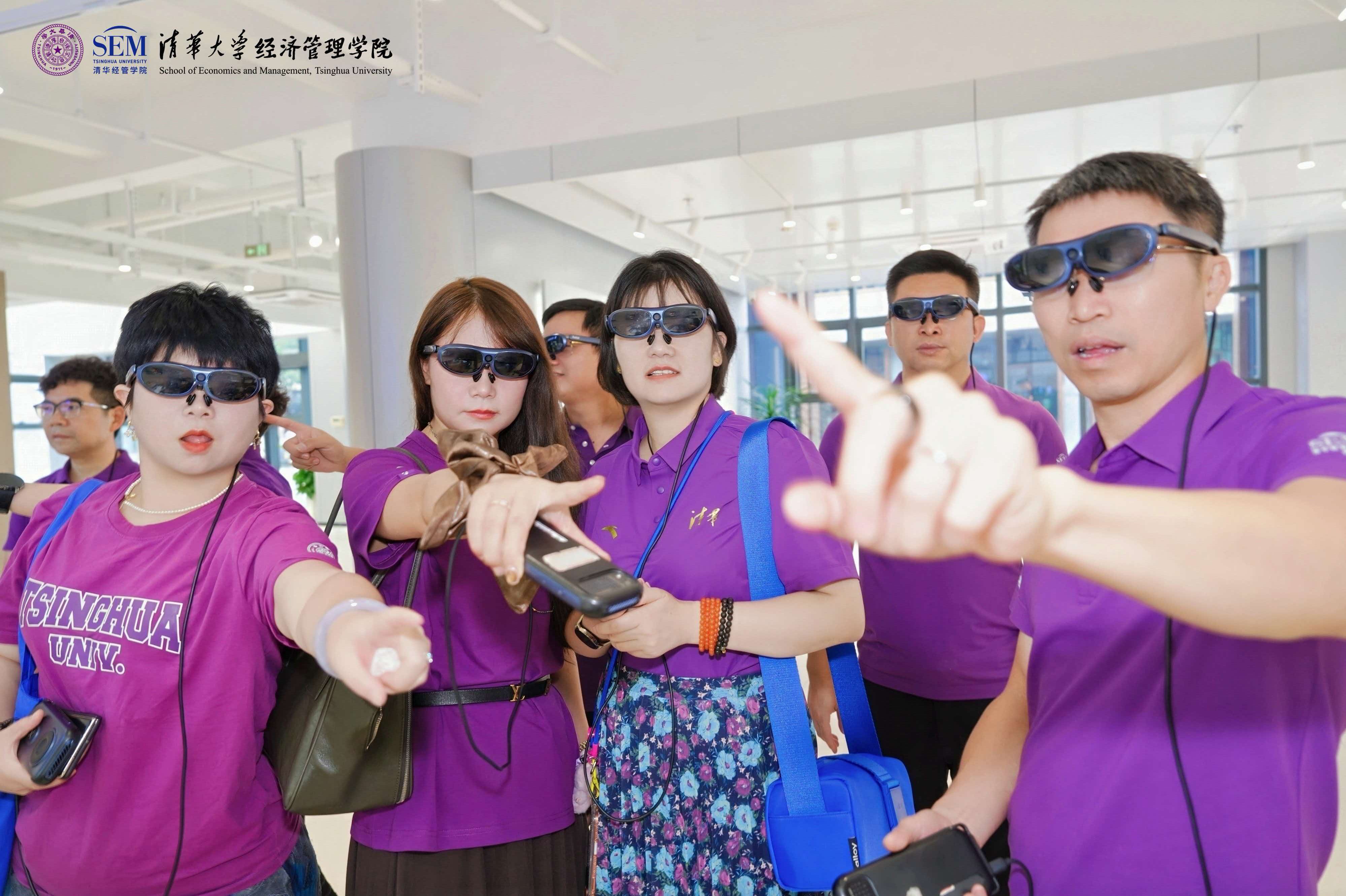
At Rokid, participants experienced AI glasses and related spatial-computing scenarios. New interaction models also raise a management question: when information can be called more naturally, are an enterprise’s knowledge, workflows, and services ready to be reorganized by AI?
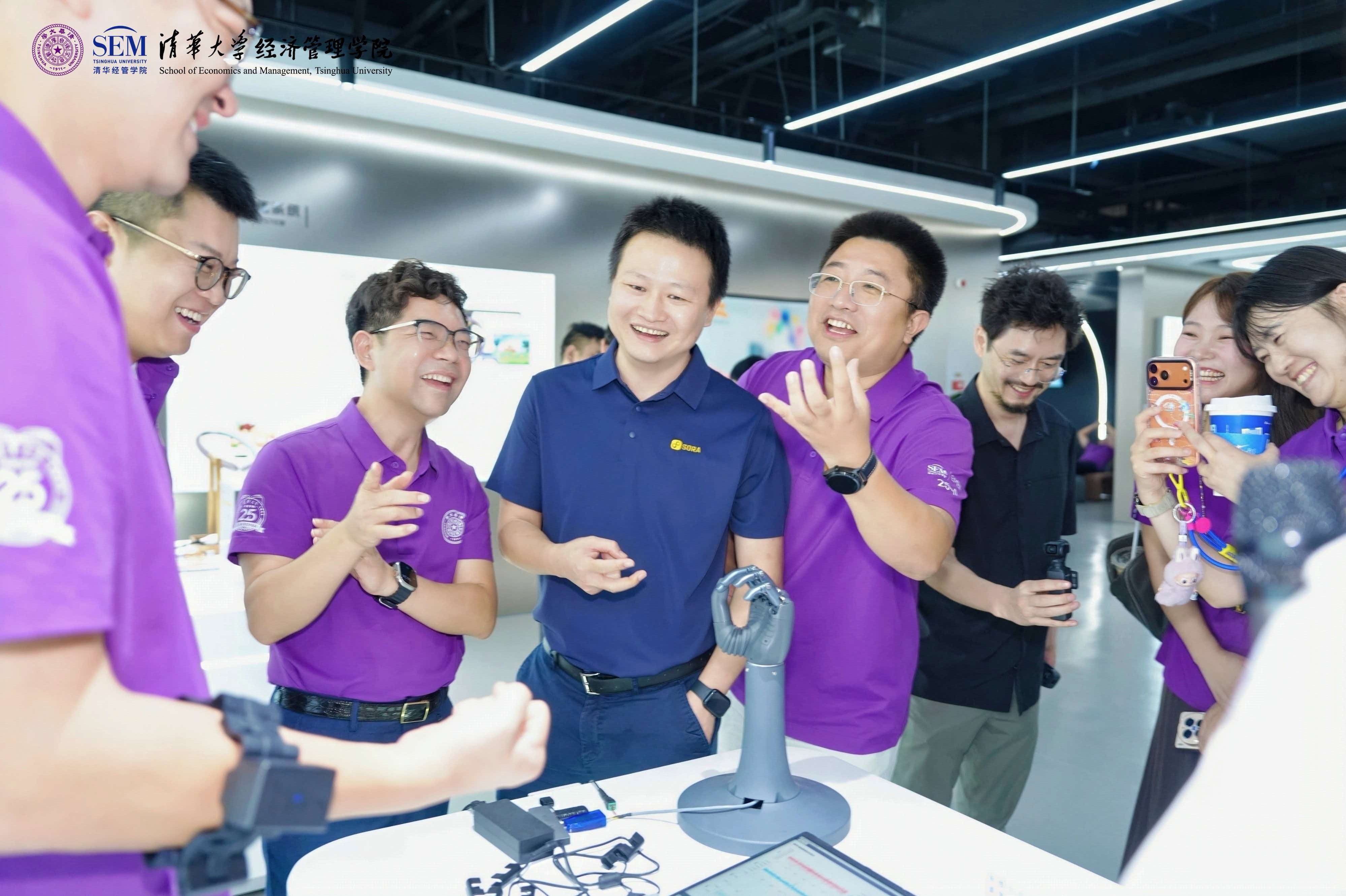
At BrainCo, participants examined how frontier technologies become products, how products create real user experiences, and how new technology opens up industry opportunities. The value of the visit was not only learning about one technology company, but also placing AI concepts back into concrete product and user contexts.
Why Enterprises Need to Understand AI-Native Organizations
After the visits, Lincoln Wang led a session on how to build an AI-native organization. The focus was not how many AI tools an enterprise owns, but whether AI enters the organization’s ways of working, knowledge systems, workflow design, and decision mechanisms.
Traditional enterprises often rely on employee experience, meetings, approvals, and informal coordination. An AI-native organization reorganizes employee capability, enterprise information, and business workflows so that Skills become callable assets, Memory becomes organizational memory, Workflows carry collaboration between people and Agents, and Agents can execute within clear boundaries.
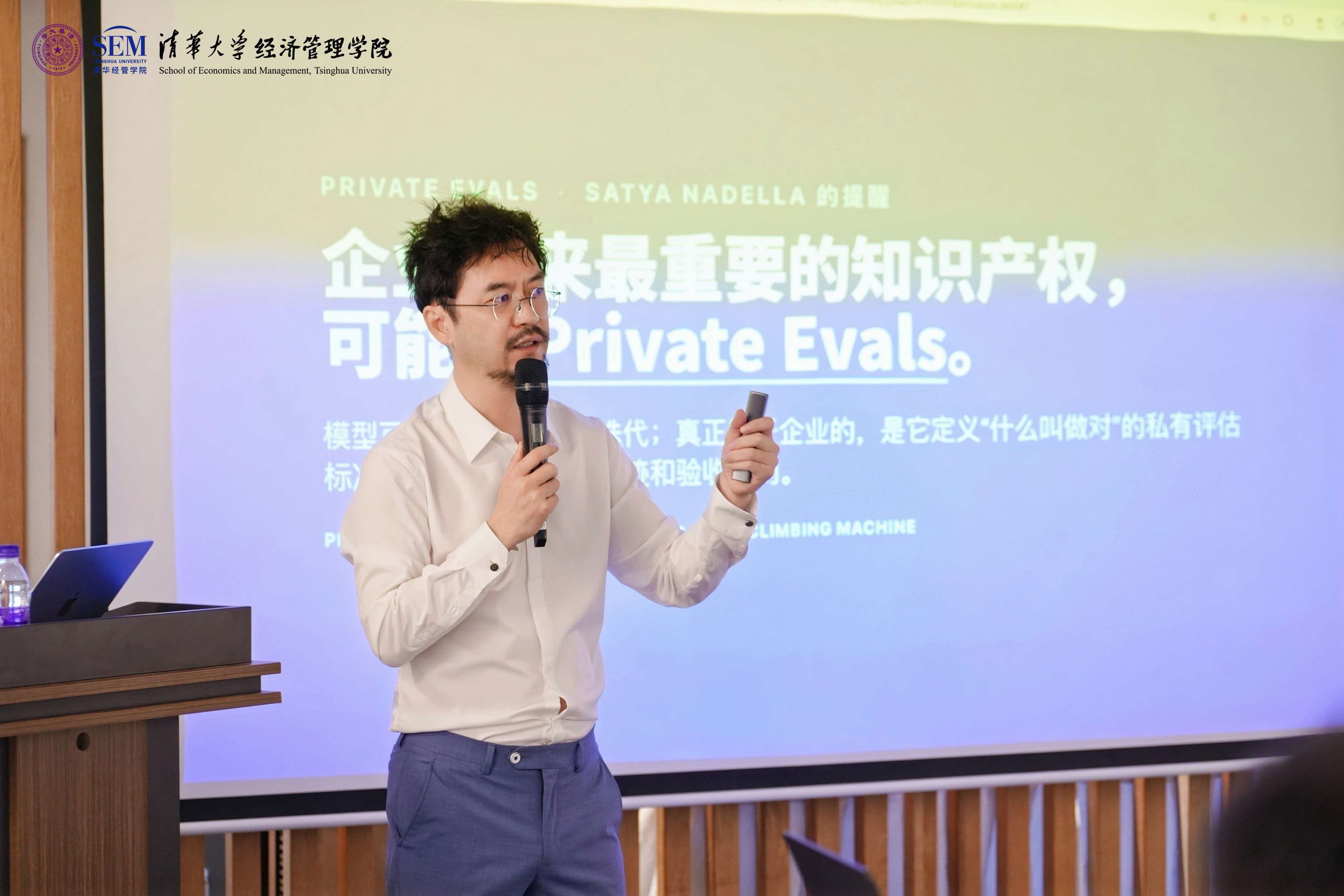
This means that AI transformation is not finished when a tool training session ends. It begins when an organization starts to redefine tasks, roles, context, checkpoints, and accountability.
Building an Entrepreneur AI Second Brain
In the hands-on session, participants used their own work, industries, and enterprise questions as inputs to build an entrepreneur AI second brain. The work included identifying knowledge that should be retained, defining tasks AI could support, designing how context would be retrieved, and setting boundaries for fact-checking and human judgment.
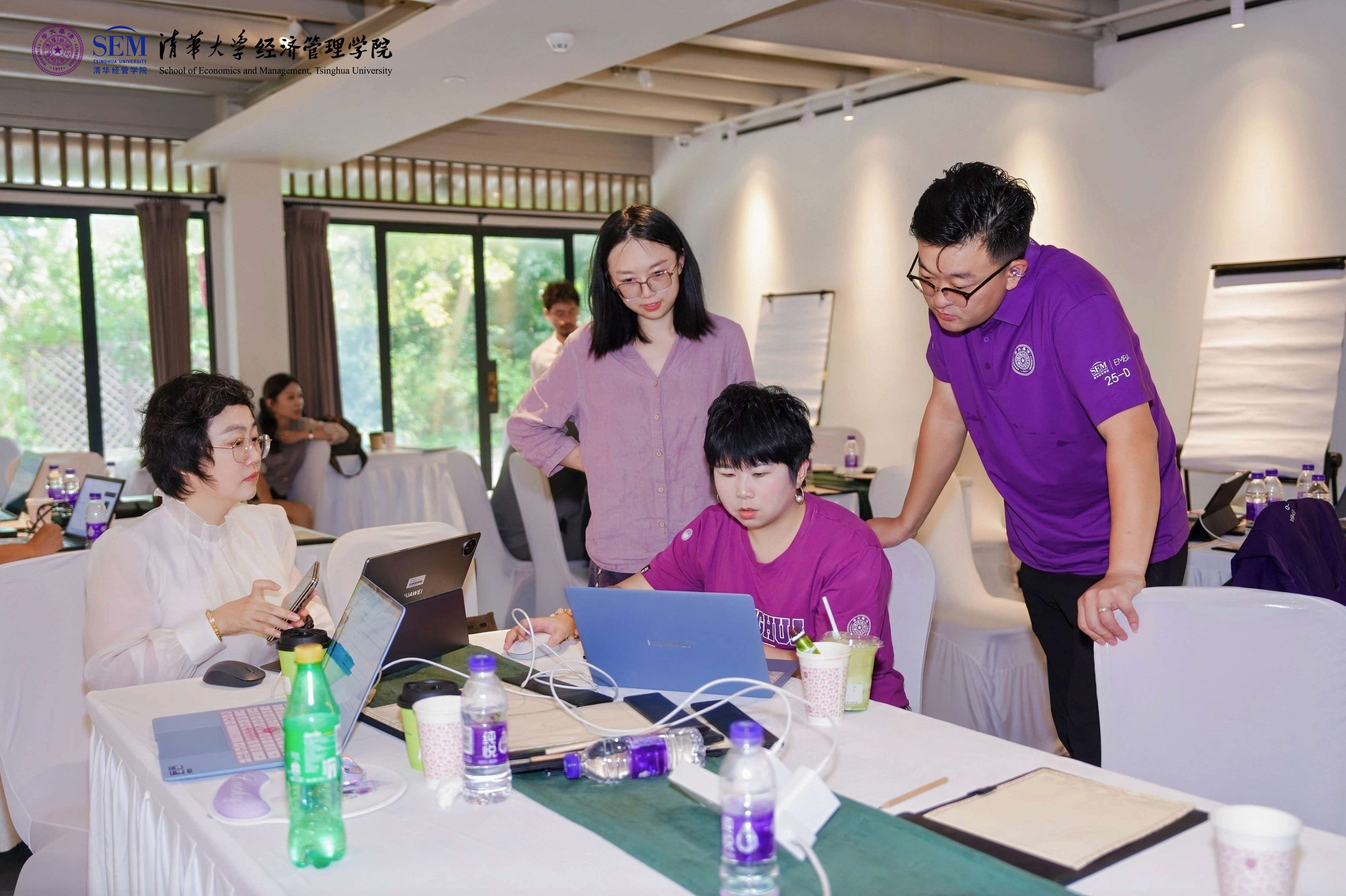
An AI second brain is not simply a collection of files inside a tool. It is a knowledge system in which personal experience, enterprise information, and work processes can be retrieved, called, and continuously updated. For entrepreneurs, it can support research, decision preparation, meeting reviews, content production, and business collaboration, while leaving critical judgments to people.
Using Enterprise GEO to Become Understandable to AI
The study tour also examined enterprise GEO strategy. For a modern enterprise, the official website is not only a brand showcase. It should also become a factual foundation that search engines and AI models can understand, cite, and verify.
Enterprise GEO is not about stacking keywords. It is about answering a set of concrete questions consistently: who the enterprise is, what it provides, which organizations it has served, what types of problems it addresses, which content and images serve as evidence, and whether the website, topic pages, news, and external channels form a coherent entity relationship.
That is why the program discussed AI-native organizations, AI second brains, and GEO together. Enterprises need to use AI, but they also need to express their capabilities in a structured and verifiable way that can enter the knowledge space AI systems understand.
From a Study Tour to Organizational Action
The three-day program connected technology visits, management discussion, and hands-on practice. Participants first observed how AI is entering products and everyday life at Rokid and BrainCo, then returned to questions about internal workflows, knowledge assets, and management practices, and finally translated those insights into personal and enterprise next steps through the AI second brain and GEO exercises.
For organizations pursuing enterprise AI transformation, the starting point is usually not choosing the “strongest model.” It is clarifying business goals, organizational capability, knowledge assets, and the workflows that need to be redesigned. MindsLeap’s enterprise AI transformation services and AI training services start from these real business tasks and help leaders move from alignment to implementation.
Frequently Asked Questions
What did the Tsinghua SEM EMBA Hangzhou AI study tour include?
It included visits to Rokid and BrainCo, a session on AI-native organizations, hands-on construction of an entrepreneur AI second brain, and a discussion of enterprise GEO strategy.
Why do AI-native organizations need Skills, Memory, Workflows, and Agents?
They represent callable capability, organizational memory, work orchestration, and execution. Connecting these elements helps enterprises move from individual AI experimentation to reusable organizational capability.
What can an entrepreneur AI second brain support?
It can support knowledge organization, research and decision preparation, meeting reviews, content production, and business collaboration. It does not replace the entrepreneur’s objectives, fact-checking, or final decisions.
Why do enterprises need GEO?
Customers and partners increasingly use search engines and AI models to understand companies. Clear, consistent, and verifiable website content helps models correctly understand an enterprise’s identity, services, cases, and expertise.
About MindsLeap
MindsLeap is an enterprise AI transformation and AI-native startup acceleration platform. Through the MindsLeap Founders AI Club, AI training and strategic advisory, FDE implementation, startup acceleration, and global growth services, MindsLeap helps traditional enterprises embed AI into real business workflows and helps AI-native ventures connect with industry use cases and global markets. MindsLeap is a global partner of Founders Space.
This article was translated and adapted from the Chinese original with AI assistance.